
Stroke Disrupts Brain Network Dynamics

Post by Anna Cranston

What's the science?

Post-stroke cognitive decline is described as the onset of memory loss and cognitive dysfunction following an ischemic stroke. However, smaller infarcts can also lead to milder cognitive deficits such as impaired attention and the inability to concentrate. Smaller infarcts can also occur in brain regions not typically associated with cognitive function. The underlying physiology of this phenomenon, known as post-stroke acute dysexecutive syndrome (PSADES), remains unclear. This week in PNAS, Marsh and colleagues used magnetoencephalography (MEG) to investigate differential activation patterns following minor strokes in patients exhibiting PSADES to determine the underlying pathophysiology.   

How did they do it?

The authors recruited a group of patients who had recently been hospitalized with MRI evidence of a small acute ischemic stroke. Due to the small size of the lesion, patients appeared almost normal, without any problems moving or speaking. Prior to study participation, all patients underwent comprehensive neurological examinations and cognitive screening using the Montreal Cognitive Assessment (MoCA). The authors also selected age-matched individuals with no prior history of stroke as a control group. They used MEG, a technique used to map brain activity, via the magnetic fields the brain generates, to determine differences in cerebral activation patterns between stroke and control groups. They recorded MEG activity during the completion of a visual comprehension task involving picture-word matching. Analysis of MEG activity at selected time points, known as epochs, were analyzed using a specific time-frequency analysis known as cluster-based permutation. The authors also used source localization analysis to map the spatiotemporal activity of each patient’s brain and then targeted their analysis to recorded activity from the occipital lobe, fusiform gyrus, and lateral temporal lobe, given their importance in visual recognition and language processing.    

What did they find?

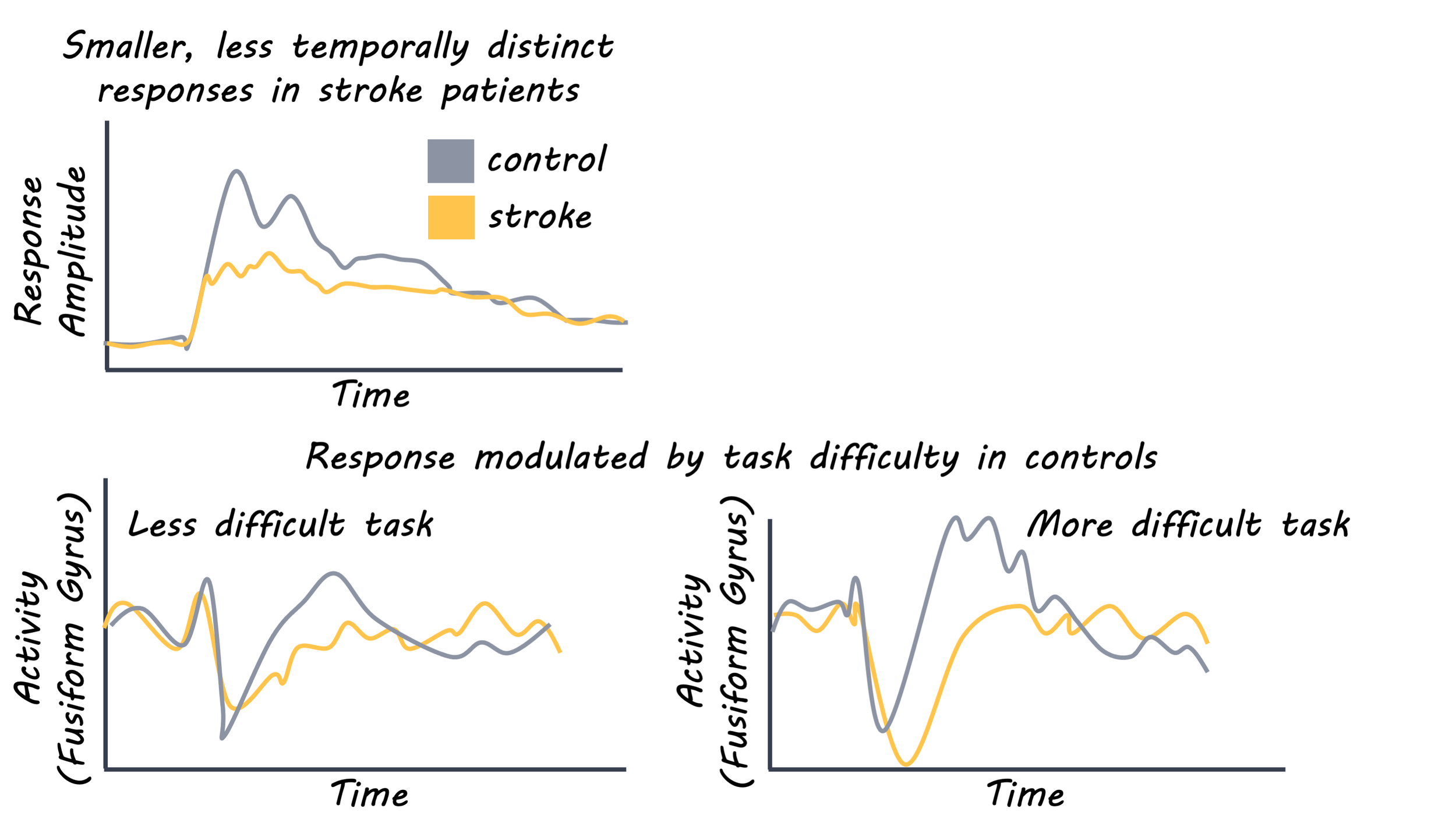
The authors found that minor stroke patients scored significantly lower on cognitive tests compared to control patients. In addition, they displayed reaction times twice as long as those of controls during the visual comprehension tasks. Although differences in reaction times may seem subtle, they are clinically significant in the context of being able to respond or shift attention back and forth quickly during conversations. Using MEG analysis, the authors also identified group differences in activation patterns within the visual cortex, fusiform gyrus, and lateral temporal lobe. They found that stroke patients exhibited a significantly different activation pattern in the brain in response to visual stimuli. Specifically, stroke patients exhibited brain responses of smaller amplitude with less temporally distinct activation peaks following a minor infarct. These differences in activation were found to be more prominent in the fusiform gyrus and lateral temporal lobe.
stroke_jan19.png

Of particular interest, each of the stroke patients tested in the study exhibited small acute infarcts in regions of the brain not typically associated with cognitive dysfunction. The activation patterns in these non-cognitive regions suggest that a disconnect in the processing loops in the brain, or network dysfunction, may be responsible for the observed PSADES symptoms in the stroke patient group. The authors also found that while control patients were able to modulate the amplitude of their brain activation in response to words, stroke patients displayed a consistently low amplitude for all stimuli. These differences remained for up to 6 months later in stroke patients, which may help to explain why patients demonstrate cognitive fatigue in the initial months after stroke.

What's the impact?

This study found that patients with minor strokes had cognitive deficits and slowed reaction times that corresponded to abnormal activation patterns of brain activity, independent of stroke location. The authors suggest that a dysregulation of brain network dynamics may be responsible for the observed long-term deficits that occur in PSADES following minor strokes. These findings highlight the importance of brain network dynamics, even in simple tasks, such as word processing. This work provides the basis for future studies to investigate the exact underpinnings of PSADES, with the hope that this can eventually be targeted for therapeutic purposes.
Marsh_Jan19.jpg

Marsh et al. Poststroke acute dysexecutive syndrome, a disorder resulting from minor stroke due to disruption of network dynamics. PNAS (2020). Access the original scientific publication here.
The ‘Global Workspace’ of the Human Brain

Post by Lani Cupo

What's the science?

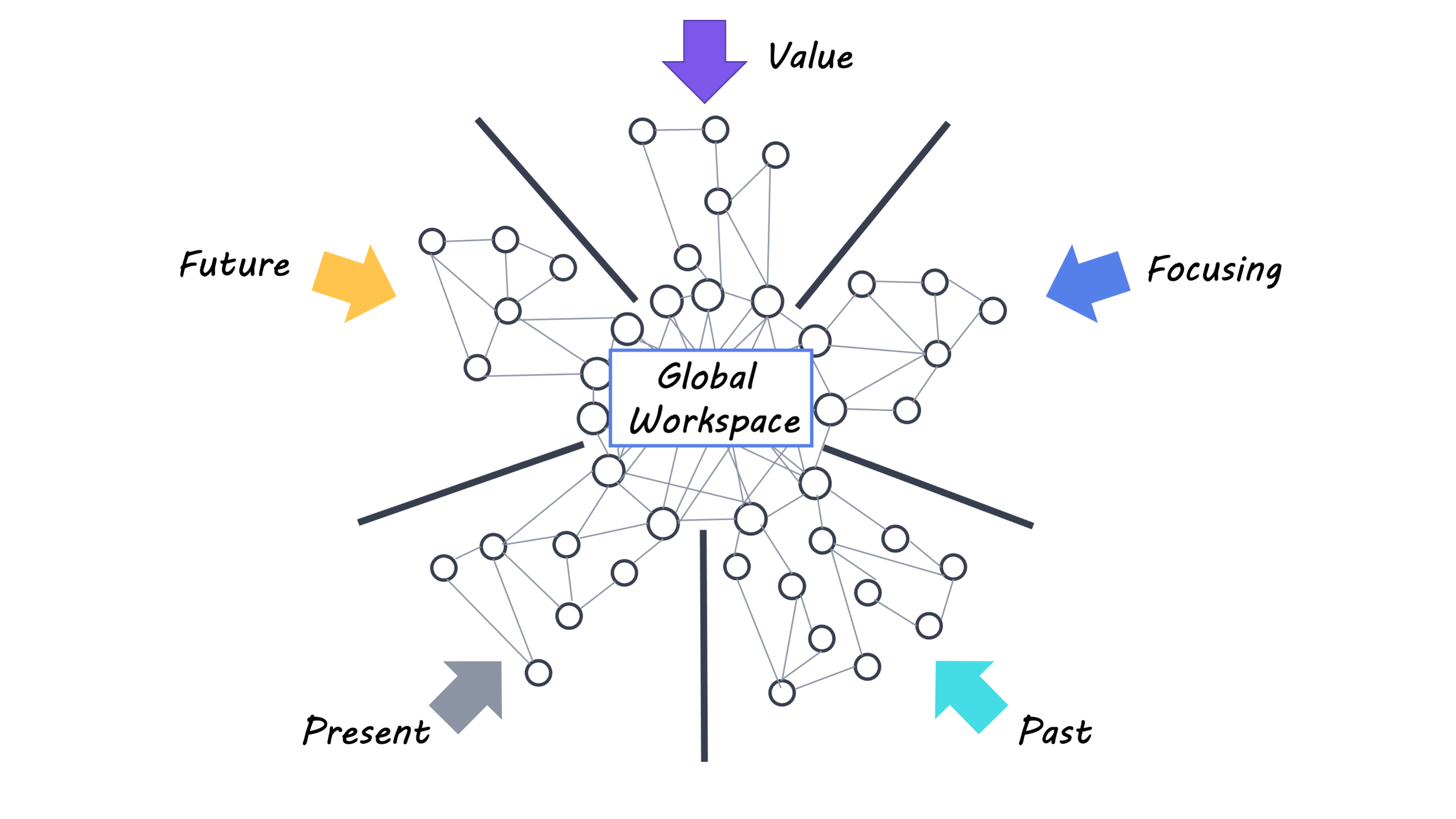
Previous research suggests that there are brain regions central to controlling the flow of information throughout the brain. This flow of information allows for the orchestration of human behaviour and has been proposed to be essential for consciousness. These brain regions can be thought of as a ‘global workspace’ that integrates lower-level sensory information and memory before broadcasting back to the whole brain. However, which brain regions comprise this ‘global workspace’ of the brain remain unclear. This week in Nature Human Behaviour, Deco and colleagues identified these brain regions using a large functional magnetic resonance imaging (fMRI) data set, examining which areas were involved while participants executed seven different behavioural tasks versus during rest.  

How did they do it?

The authors included fMRI scans from 1,003 participants, including both men and women. The scans comprised the resting brain, as well as seven behavioural tasks assessing working memory, motor skills, reward processing, language processing, social cognition, emotional processing, and relational processing. The authors’ first step was to compute information flow between regions by mathematically modelling (normalized directed transfer entropy framework) how brain activity in a given region is causally related to other areas over time. Specifically, they sought to establish the hierarchy of information flow, including the identification of the top-level regions with a lot of incoming information and communication between them but relatively little outgoing information. This allowed them to locate regions that orchestrate brain function across tasks. They identified areas in the so-called ‘functional rich club’ (i.e., brain regions highly connected to one another) that were involved in this high-level processing role across all the tasks and during rest. Next, they created a computational model of the whole brain fitting the information flow between brain regions. To confirm they had identified core functional rich club areas central to processing, they removed the identified brain regions from the computational model, examining the extent to which the model was altered when each region was removed. The more information flow was altered after removing a region, the greater this brain region’s executive functioning proved to be.

What did they find?

Eight brain areas were identified within the central core of those regions organizing behaviour. These included the left precuneus, left nucleus accumbens, left putamen, left posterior cingulate cortex, right hippocampus, right amygdala, and left and right isthmus cingulate. These brain regions comprise both areas in the cerebral cortex, such as the precuneus, and deeper subcortical structures, like the amygdala. The authors suggest that these regions in the global workspace are ideally located to integrate information from the senses, long-term memory, value judgments, and attention devoted to controlling behavior. By simulating lesions to these areas, they demonstrated that removing all of the identified functional rich club areas impacted information flow significantly more than when they removed brain areas outside of the functional rich club.

global_workspace_jan12.png

What's the impact?

This study provides evidence that the brain is organized in a hierarchy, with certain lower-level regions performing low-level processing while other higher-order regions integrate information from multiple sources, orchestrating human behavior and consciousness. By identifying the set of regions that fulfill high-level processing roles in the brain, the authors helped to characterize the structure and direction of information flow in the brain while quantifying the global workspace. 

Krigelbach_jan12.jpg

Deco et al. Revisiting the Global Workspace Orchestrating the Hierarchical Organization of the Human Brain. Nature Human Behaviour (2021). Access the original scientific publication here.

How Do the Blind See?

Post by Elisa Guma

What's the science?

At rest — independent of external stimulation — the brain generates spontaneous activity. Our knowledge about the functional role of this brain activity is limited. However, scientists hypothesize that it generally underlies unprompted, internally-generated behaviours, including hallucinatory experiences. This week in Brain, Hahamy and colleagues investigated whether spontaneous brain activity evokes unprompted cognitive behaviours by observing the neural correlates of visual hallucinations in the visually impaired. 

How did they do it?

To investigate the relationship between spontaneous activity in the brain’s visual cortex and participants’ visual hallucinations, the authors recruited five individuals with Charles Bonnet syndrome (CBS), a rare condition characterized by the development of complex visual hallucinations following the onset of visual impairments or vision loss.

During functional magnetic resonance imaging (fMRI), CBS participants were instructed to provide verbal reports of their hallucinations. The authors then used these reports, along with reported post-hoc details about the content of the hallucinations, to create movies simulating the hallucinatory streams. To compare the neural activity associated with the internally-generated hallucinations, the authors showed these videos (external stimulation) to thirteen sighted controls during fMRI scanning. Finally, the 5 CBS participants, 13 sighted controls, and an additional group of 11 late-onset blind individuals not experiencing visual hallucinations underwent a cued visual imagery task during fMRI scanning where they were asked to imagine faces, houses, objects, and patterns, to serve as cued, internally-generated vision.

The authors extracted the blood oxygenation level-dependent (BOLD) brain activity from participants’ fMRI scans and used nonparametric statistics to identify the brain regions associated with a) hallucinations in the CBS group, b) the external stimulation (video of hallucinations) in the sighted controls, and c) the internally-generated, cued visual imagery task in all groups. Additionally, the authors compared the temporal dynamics of brain activity (as measured by BOLD) during hallucinatory events and visual stimulation to identify whether any changes in BOLD preceded the onset of visual experiences.

What did they find?

CBS participants’ brains showed significant activation across the entire visual cortex during hallucinations. Similar effects were observed in sighted controls during simulated hallucinations (i.e., watching the videos). Next, the authors compared brain activity during hallucinations to that of cued imagery, both of which are internally generated, but only hallucinations were unprompted. During the visual imagery task, sighted controls tended to activate high-order visual areas while deactivating mid-level areas, whereas CBS and blind control groups showed activations across the entire visual system, with very similar spatial patterns as those found during hallucinations.

elisa.jpg

Investigation of the temporal dynamics of the BOLD signal revealed BOLD signal increases during hallucinations in the CBS group and during simulated hallucinations in the sighted controls. Interestingly, the signal in the CBS group increased before the onset of hallucinations in early visual areas and then spread to higher-order areas, providing some evidence that the hallucinations may be a result of a buildup in spontaneous activity in the visual cortex. Importantly, no differences in dynamics were observed in the cue-driven visual imagery scans.

What's the impact?

The findings presented here show that, unlike other visual experiences, visual hallucinations may arise due to a buildup of neural activity in the early visual cortex, which then spreads to higher-order visual areas. This provides a plausible mechanism for the emergence of visual hallucinations in CBS. More broadly, these findings highlight the possible role of spontaneous brain activity in evoking visual hallucinations following visual deprivation. Future work may further investigate the relationship between spontaneous brain activity and other internally-generated behaviours, such as dreaming.     

Hahamy et al. How do the blind ‘see’? The role of spontaneous brain activity in self-generated perception. Brain (2020). Access the original scientific publication here.