
Memories that Share a Common Structure are Linked Together

Post by Amanda McFarlan

What's the science? 

The memories that we form in our everyday lives often share a common structure. For example, many songs are made up of different notes, but follow a similar structure. Additionally, memories are highly susceptible to interference while they are being formed which can disrupt the process of consolidation and therefore, memory retention. This week in Current Biology, Mutanen and colleagues proposed that sharing a similar structure might link memories together and determine how they are stored and modified. They investigated whether sharing a common structure among memories affected their retention and susceptibility to interference. 

How did they do it?

The authors created two memory tasks: a sequence of actions and a sequence of words. The sequential order of actions and words in the memory tasks either followed the same ‘structure’ (each action corresponded to one semantic category of words - e.g. a thumbs-up action always corresponded to a type of vegetable; see figure) or did not follow the same structure. 

The authors performed two experiments, each with multiple stages. In Experiment 1, the steps were: 1) Participants learned a sequence of actions 2) 6 hours later, they learned a sequence of words that either did or did not follow the same structure as the previously learned sequence of actions, 3) Participants were tested on their word recall and then immediately learned a new sequence of words, designed to interfere with memory consolidation, before being asked to recall the first list of words again. 

In Experiment 2: 1) Participants learned a word sequence, 2) 6 hours later, they learned a sequence of actions that either did or did not follow the same structure as the previously learned word sequence, 3) Participants were tested on their ‘skill level’ (measured by their response time) for the sequence of actions, 4) Participants immediately learned a new sequence of actions (to interfere with memory consolidation), and 5) Their skill level was tested again for the first sequence of actions. The authors also tested participants without any prior learning on word recall and measured skill level before and after interference. Finally, the authors investigated how well participants could retain their initial learning by retesting their word recall or measuring their skill level 12 hours after initial learning. 
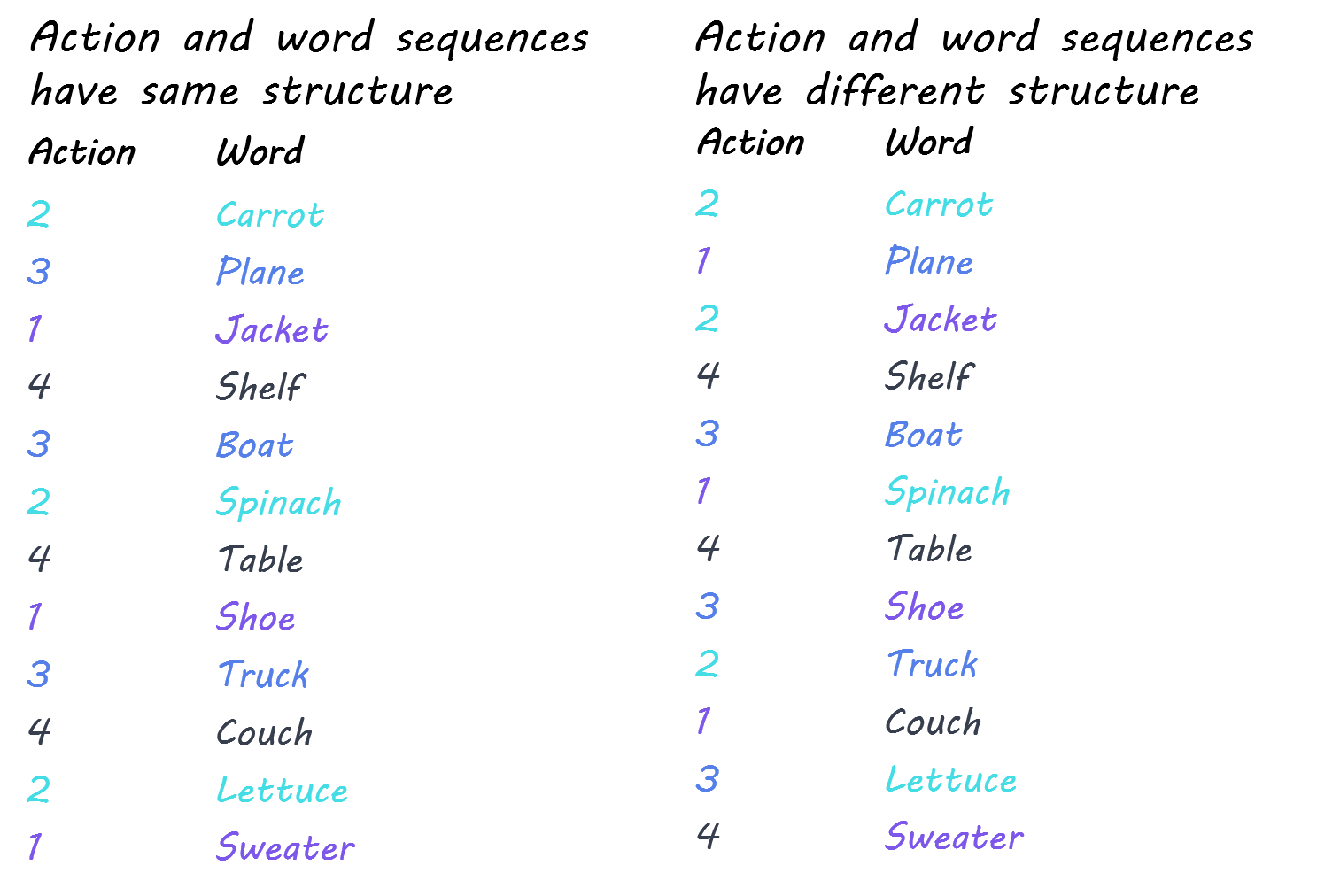
words_actions.png

What did they find?

In Experiment 1, the authors found that total word recall decreased following interference (i.e. learning new words) during word sequence learning. However, this decrease in word recall was not as robust when the sequence of words and the previously learned sequence of actions followed the same structure versus when they did not. 

In Experiment 2, the authors found that interference during action sequence learning resulted in a reduction in skill level only when the sequence of actions and the previously learned sequence of words did not follow the same structure, while there was no change when they did follow it. The authors also showed that the effect of interference on performance was much greater when participants had not previously learned a sequence of actions or a sequence of words, respectively. Together, these findings suggest that new memories can be protected from interference if they share a common structure with a recently acquired memory. 

Next, the authors revealed that there was a significant improvement in skill level 12 hours after initial learning when the sequence of actions and words had different structures. They also found a significant decrease in serial word recall (the precise order of the words in the sequence) 12 hours after initial learning when the motor and word memory tasks had the same structure, but not when the memory tasks had different structures. Together, these findings suggest that new memories can affect the retention of recently acquired memories when they share the same common structure.

What’s the impact?

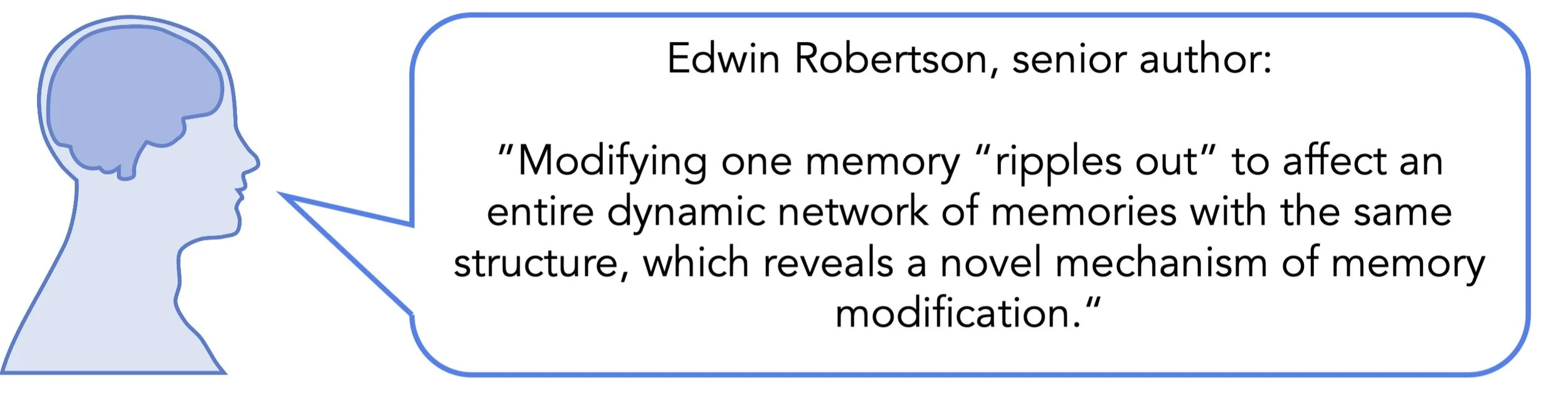
This is the first study to show that memories that share a common structure are linked together. The authors found that, when an earlier memory and a newly formed memory shared a common structure, the newly formed memory was protected from interference while the retention of the earlier memory was disrupted. Together, these findings provide insight into how similarly structured memories are stored and modified.
Robertson_quote_Apr21.jpg

Mutanen et al. A Common Task Structure Links Together the Fate of Different Types of Memories. Current Biology (2020). Access the original scientific publication here.
More Than One Way to Build a Thought

Post by Lincoln Tracy 

What's the science?

Have you ever wondered how you understand a sentence that you’ve never read before? Our brains rely on the principle of compositionality, or how we understand the meanings and order of words within a sentence. Even simple sentences require us to understand each word individually, as well as the order the words are presented in. While several studies over the last 20 years have used functional neuroimaging techniques to study how the brain develops strategies to represent the meanings of different parts of a sentence, less is known about how the brain combines individual meanings of words to store the meaning of a complete sentence. This is particularly true for storing the meaning of sentences, such as who did what to whom. This week in Cerebral Cortex, Frankland and Greene use functional magnetic resonance imaging and encoding models to describe how three brain regions contribute to the representation of relational combinations within a sentence.

How did they do it?

First, the authors created a series of 240 simple and unique sentences from a pool of six animal words and eight verbs. Each sentence described one animal interacting with another animal in some way – e.g., “the hawk surprised the moose”. Second, they recruited 55 English speaking individuals (31 females, mean age of 23 years) from the Cambridge (Massachusetts) area. Each participant underwent a functional magnetic resonance imaging scan where they were presented with each of the 240 sentences, one at a time. On a third of the trials, participants were asked a comprehension question after reading the sentence to test whether they understood and were able to remember the sentence. Once all the scans had been completed, the authors looked at the entire brain to identify regions that encode complex and structured semantic information that was similar across sentences. They also examined activity specifically in the left-mid superior temporal cortex and the hippocampus, two other brain regions known to be associated with representing relationships within an event. Specifically, they were interested in determining what kind of information was stored in each of these regions as we try to understand a sentence.

What did they find?

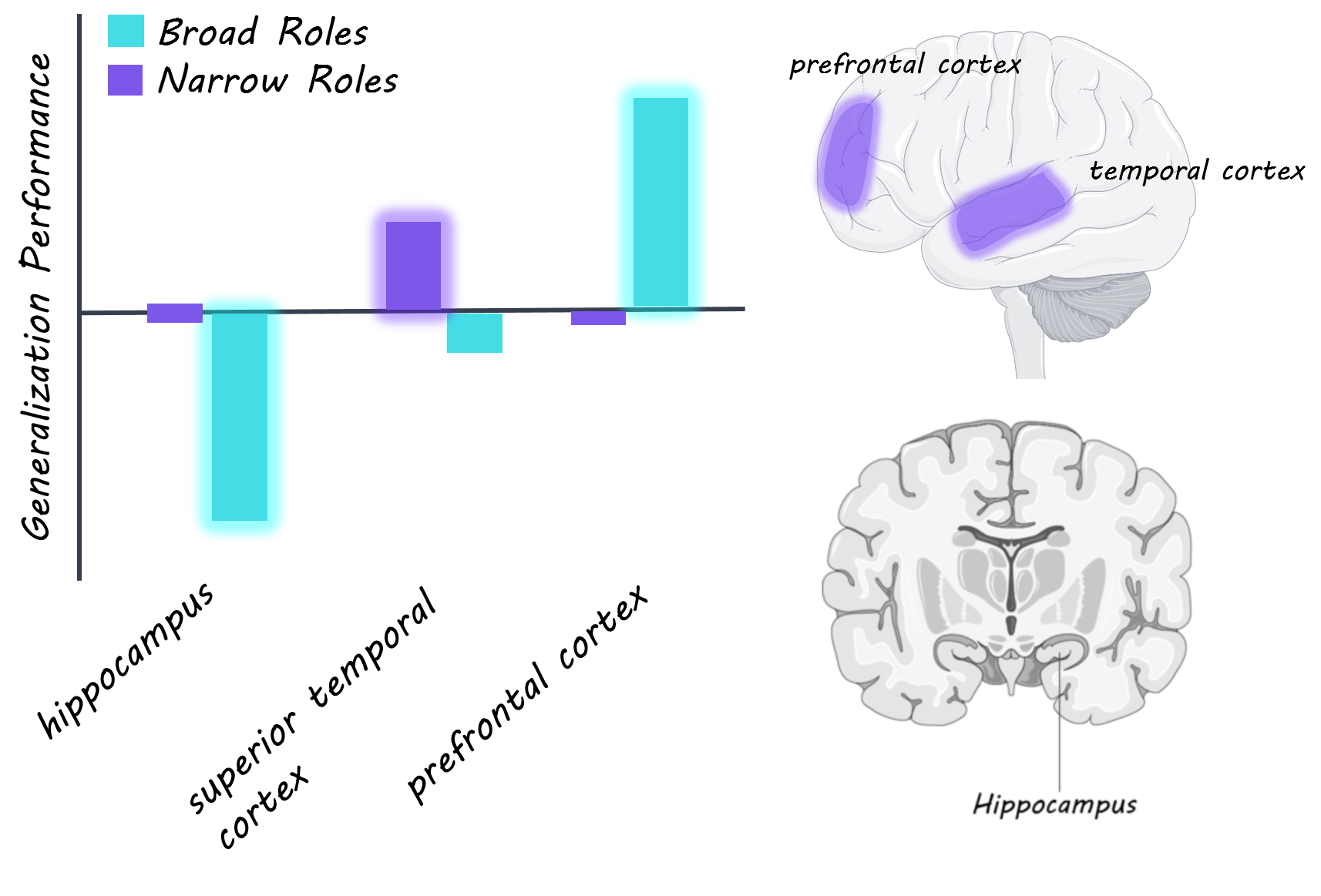
The authors found that information stored in a part of the brain in the anterior-medial prefrontal cortex can be used to interpret new sentences. That is, this section of the prefrontal cortex uses narrow roles that are re-used across sentences – e.g., the same representation is used for the sentence “the cow approached the goose” and “the cow approached the hawk”. Second, they found that the left-mid superior temporal cortex carries more basic information about the unique structure of new sentences — in contrast to the role of the prefrontal cortex. Third, they found that the hippocampus more commonly treated sentences that contained the same parts as dissimilar; another different role compared to the prefrontal cortex. Taken together, these three regions seem to play different roles in encoding how an event within a sentence is composed. However, the roles of all three regions are important and necessary.

broad_and_narrow_roles.png

What's the impact?

This study identified that while regions within the frontal and temporal lobes of our brain both help us understand a sentence by carrying information about who did what to whom, these regions differ in the level of detail they store. This study also identified that a part of the anterior-medial prefrontal cortex stores information that can be used when trying to understand new sentences. These findings suggest that the medial prefrontal cortex plays an important role in reusing existing knowledge to store information about new combinations of words in sentences, but that the left-mid superior temporal cortex uses a more arbitrary scheme for storing information. Further research is required to understand how the brain adaptively organizes and utilizes these different systems to provide a unified understanding of novel and complex sentences.

Frankland et al. Two Ways to Build A Thought: Distinct Forms of Compositional Semantic Representation Across Brain Regions. Cerebral Cortex (2020). Access the original scientific publication here.

Could the COVID-19 Virus Be Neuroinvasive?

Post by Flora Moujaes 

What's the science? 

In late February 2020, a few days before the World Health Organization declared COVID-19 a pandemic, Li and colleagues from Jilin University in eastern China published an article proposing that the COVID-19 virus may be able to enter the brain and spinal cord. The hypothesis that COVID-19 is neuroinvasive suggests that the respiratory distress experienced by COVID-19 patients is not just due to inflammatory structural damage to the lungs, but also due to damage to the respiratory centers of the brain that control breathing. This could help explain why some patients develop acute respiratory failure and others do not. This week in the Journal of Medical Virology, the researchers published a follow-up article outlining the additional evidence for this hypothesis that has emerged in the last month, as COVID-19 continues to spread around the world.  

What’s the theory? 

When Li and colleagues first published their hypothesis that the COVID-19 virus may be neuroinvasive, their theory was mainly based on the evidence that other similar coronaviruses are neuroinvasive. For example, the severe acute respiratory syndrome (SARS) epidemic, which began in the early 2000s and resulted in 774 deaths, was caused by a similar coronavirus to COVID-19. The SARS virus has been found in neurons in the brains of both patients and experimental animals, particularly in the part of the brain known as the medulla, the brain’s primary respiratory control center. If like the SARS virus, the COVID-19 virus is able to invade brain regions such as the medulla, this invasion could be partly responsible for the acute respiratory failure seen in COVID-19 patients. It would also explain why one 24-year-old COVID-19 patient described losing her ability to breathe involuntarily, and why a small number of initial COVID-19 patients reported neurological symptoms such as headaches (8%) and nausea and vomiting (1%). 

What’s new? 

At the time of publishing their initial hypothesis that COVID-19 may be neuroinvasive, there were less than 90,000 confirmed cases worldwide. One month later, Li and colleagues published a follow-up article outlining the additional evidence for the hypothesis that emerged as the number of worldwide cases surged to over 1.5 million:

(1)   A study on 214 COVID‐19 patients in Wuhan found that neurological symptoms were more common than previously thought and that severe patients were more likely to display neurological symptoms: 36.4% of patients showed neurological symptoms while severe patients were more likely to display neurological symptoms such as acute cerebrovascular diseases (5.7%), impaired consciousness (14.8%) and skeletal muscle injury (19.3%). 

(2)   Loss of smell and taste has also been reported in COVID‐19 patients in several countries, and a similar olfactory dysfunction was also reported in SARS patients. While this symptom can commonly be caused by changes in the nasal cavity during illness, loss of smell can also result from damage to the olfactory nerve through which the virus may enter the brain.

(3)   A limited number of individual case studies demonstrated that the COVID-19 virus is able to infiltrate the brain. For example, in Japan a 24-year-old COVID-19 patient showed meningeal irritation: inflammation of the membranes that cover the brain and spinal cord. Meanwhile, in Beijing a 56-year-old COVID-19 patient presented with encephalitis: inflammation of the brain most commonly caused by a viral infection. Cerebrospinal fluid samples from both patients tested positive for the COVID-19 virus.

(4)   It is still unclear why some patients develop respiratory failure and others do not. For example, a study on 81 COVID‐19 patients in Wuhan showed both asymptomatic and symptomatic patients displayed lung lesions. If neuroinvasion of COVID-19 affected an individual’s breathing, it could help explain the differences in disease progression between these two groups of patients.

What’s the bottom line?

There is growing evidence that the COVID-19 virus may be neuroinvasive. If this is the case, lung infections may not be the only contribution to COVID-19-related breathing difficulties; brain infiltration and damage to the key brain structures involved in the control of respiration like the medulla could play a role. More research is needed to confirm this hypothesis, and the current severity of the pandemic limits the capacity to conduct the necessary research. A greater understanding of the potential brain and spinal cord infiltration of COVID-19 could be critical for the prevention and treatment of this virus. In particular, understanding whether the virus is neuroinvasive may help explain why some patients develop respiratory failure while others do not. Neuroinvasion may also explain why complete clearance of the virus may not be guaranteed even after patients have recovered from acute infection.

Li et al. Response to Commentary on “The neuroinvasive potential of SARS‐CoV‐2 may play a role in the respiratory failure of COVID‐19 patients”. Journal of Medical Virology (2020). Access the original scientific publication here.