
Exercise Improves Brain Tissue Oxygenation in a Mouse Model of Alzheimer’s Disease

Post by Elisa Guma

What's the science?

Alzheimer’s disease (AD) is a progressive neurodegenerative disease associated with loss of memory, as well as neuronal cell death due to the aggregation of tangles (formed by misfolded tau protein in neurons), and plaques (formed by a protein amyloid-beta). Further, the vascular system has been shown to be compromised in AD, but it is unclear what role it plays in disease progression and whether it could be a potential treatment target. Voluntary exercise has been identified as an effective means for preserving brain function and preventing cognitive decline in both rodent and human research. However, the oxygenation mechanism through which voluntary exercise affects AD remains unknown. This week in the Neurobiology of Aging, Lu, and colleagues use a novel approach to image brain oxygenation and blood flow in awake mice to investigate whether brain oxygenation is compromised in a mouse model of AD and if voluntary exercise can reverse impairments. 

How did they do it?

The authors used a transgenic AD mouse model, which expresses Amyloid Precursor Protein Presenilin-1 gene mutations that have been identified in humans with AD, and develops cognitive impairments and memory loss at 4.5 months. Tissue oxygenation was measured in AD and wild-type (normal) mice at 3 and 6 months of age, as well as in a group of AD mice who were given a running wheel at 3 months and assessed at 6 months.

The authors used a novel two-photon microscopy system with a phosphorescent lifetime arm, which measures the lifetime of a fluorescent signal as opposed to just identifying its presence, in order to measure tissue oxygenation and cerebral blood flow at a sub-capillary resolution around cortical arterioles, capillaries, and venules in awake mice. Tissue oxygenation was measured using oxygen partial pressure in brain tissue which is affected by variations in blood flow and metabolic demand in different regions. To be able to view the blood vessels in the brain, the authors drilled a hole in the mouse skull (under anesthesia) above the barrel cortex, while keeping the dura mater (a layer of tissue surrounding the brain and spinal cord) intact, and mounted a glass cover over it, keeping a small silicone-covered hole on the side to act as a biocompatible port. 

An oxygen-sensitive dye was injected into the brain tissue via the biocompatible port, and tissue oxygenation was measured using the two-photon phosphorescence lifetime microscopy. This allowed the authors to see how quickly the oxygen-sensitive dye was decaying (an advantage of the phosphorescence lifetime microscopy), to assess how oxygenated the tissue was at a given time. The authors used another kind of imaging technique, Doppler Optical Coherence Tomography, to acquire cerebral blood flow estimates in the blood vessels. During the experiment, the animals could move on a treadmill wheel which allowed free movement of the limbs. Following the awake imaging, the authors collected the brains of their mice and stained them for amyloid plaques, neuronal cell density, and the LRP1 receptor in the cortex, which has been associated with improving amyloid clearance, to determine if exercise was able to reverse AD pathology.

What did they find?

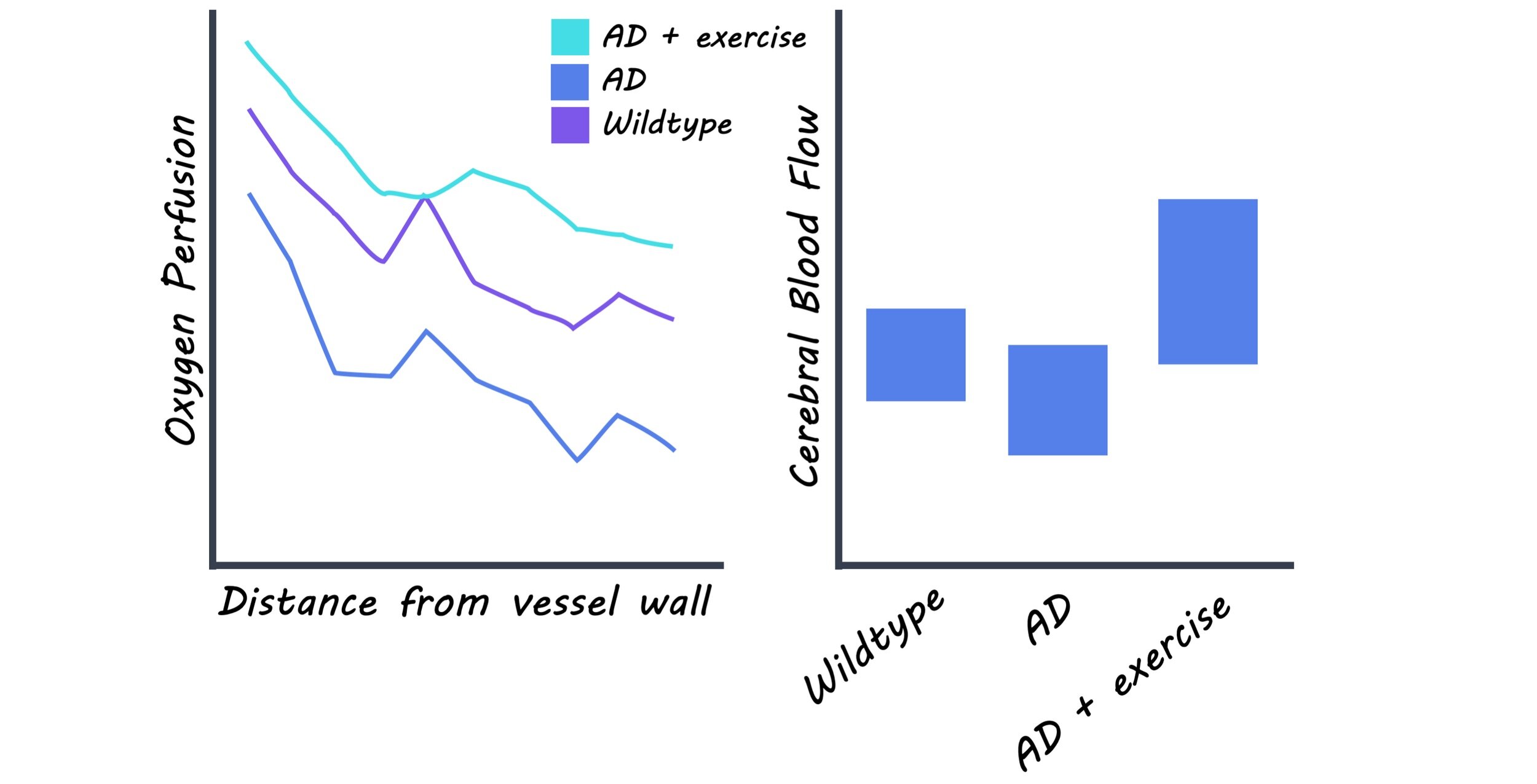
The authors found a decrease in tissue oxygenation over time in the AD mice. Further, there was more heterogeneity of tissue oxygenation indicative of vascular dysfunction both with increased age and due to AD. They also observed more regions of hypoxia or near-hypoxia (low oxygenation) and decreased cerebral blood flow in the AD mice. An increase in amyloid-beta and a decrease in neuronal cell density in the AD mice were also found.
ad_Dec3.jpg

Voluntary exercise for 3 months seemed to reverse all of the observed impairments in vascular function in the AD mice. First, the authors found increased tissue oxygenation and decreased heterogeneity of oxygenation in the AD mice. Exercise also decreased the number of near-hypoxic areas in AD mice and improved cerebral blood flow. At a cellular level, the authors found that exercise decreased the amount of amyloid-beta plaque and reversed the decrease in neuronal cell density. Interestingly, exercise increased the levels of a receptor called LRP1 in the cortex, suggesting that perhaps it may have improved amyloid clearance. Not all mice ran the same amount over the 3 months, so the authors were able to investigate whether the distance ran correlated with the improvement in oxygenation and blood flow; in fact, they found that it correlated with the amount of brain oxygenation and blood flow observed, suggesting that there is a dose-response between the two. 

What's the impact?

This study is the first to measure brain tissue oxygenation and cerebral blood flow in a live awake mouse using a cutting-edge microscopy technique. They show that blood oxygenation and cerebral blood flow are compromised in a mouse model of AD and that voluntary exercise is able to reverse many of these impairments. This suggests that exercise may be an interesting treatment intervention for individuals with dementia. Unfortunately, this work was only performed in male mice; future work should extend this work to female mice as well, as AD is more prevalent in females. 

Xuecogn Lu et al. Voluntary exercise increases brain tissue oxygenation and spatially homogenized oxygen delivery in a mouse model of Alzheimer’s Disease. Neurobiology of Aging (2019). Access the original scientific publication here.
The Role of Gut Microbes in Neurological Disorders

Post by Amanda McFarlan

What's the science?

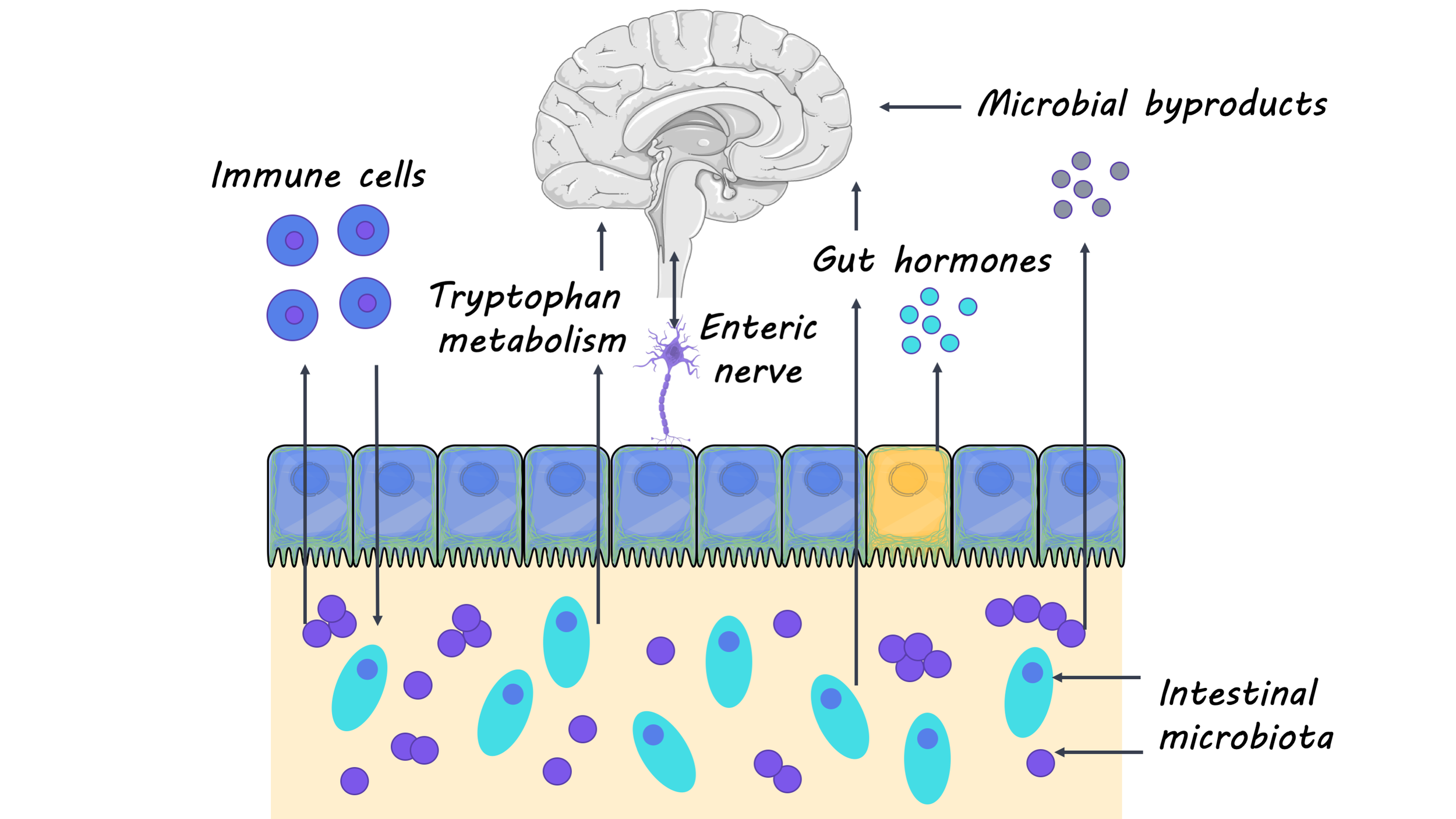
Research investigating the relationship between the gut microbiota (the ensemble of microorganisms in the gut) and overall health has gained increasing popularity in recent years. Studies have shown that the gut microbiota is important for regulating many major systems of the body, including the central nervous system. This week in The Lancet Neurology, Cryan and colleagues summarized past and present research that highlights the important role of gut microbiota in regulating the central nervous system.

What do we already know?

Much of our understanding of how the gut microbiota affects the central nervous system comes from studies using germ-free mice (i.e. lacking any gut microbiota). Researchers have shown that without the gut microbiota, germ-free mice have deficits in many neural processes that are critical for development and aging, including the maturation and myelination of neurons, neurogenesis and microglia activation. Additionally, germ-free mice had higher levels of neuroinflammation and an increase in the permeability of the blood-brain barrier, which are hallmarks of the immune-related neurological disease, multiple sclerosis. These studies with germ-free mice have provided researchers with important insights into how the gut microbiome is implicated in neurodevelopment, aging, and neurodegenerative disease. Researchers have continued to use animal models as well as clinical studies to further our understanding of the interaction between the gut and the brain. 

What’s new?

In recent studies, researchers have focused on how gut microorganisms can be targeted for therapeutic purposes in neurological diseases. In the case of treating multiple sclerosis, for example, researchers found that a multispecies probiotic, administered two times a day for two months, had an anti-inflammatory effect and reversed changes in gut microbiota. Moreover, a clinical trial for children with autism spectrum disorder revealed that children who received a microbiota transfer had significantly reduced gastrointestinal problems (commonly found to be co-morbid with autism spectrum disorder) as well as behavioral improvements. These findings suggest that some gut microbiota may be a potential target for the treatment of neurological disorders. Additionally, researchers have started to look at how gut microbiota may regulate the physiology and behavior of neurological disorders like Huntington’s disease, amyotrophic lateral sclerosis (ALS) and epilepsy. For example, researchers found that the gut microbiota is involved in synaptic changes that occur in brain regions that are associated with epilepsy. They also found that the therapeutic effects of a ketogenic diet on epilepsy are dependent on gut microbiota. Finally, recent studies have shown that many non-antibiotic drugs influence gut microbiota, highlighting the importance of investigating the relationship between the gut microbiome and medications (especially those that are prescribed for treating a neurological disorder).

gut_brain_Dec3.png

What's the bottom line?

The importance of gut microbiota on the development and overall health of the brain is becoming more and more evident. Studies with animal models and clinical trials have provided strong evidence for the role of the gut microbiota in neurological diseases like multiple sclerosis and autism spectrum disorder, with a growing body of research showing implications of the gut microbiota in many other diseases. Still, there is much more to be done in this field to elucidate the mechanisms by which gut microorganisms influence the brain. A better understanding of the gut-brain axis will provide insight into new therapies that may help treat or prevent a wide range of neurological disorders. 

Cryan et al. The gut microbiome in neurological disorders. The Lancet Neurology (2019). Access the original scientific publication here.

Exploring the Neurobiology of Consciousness Using the Psychedelic DMT

Post by Flora Moujaes 

What's the science? 

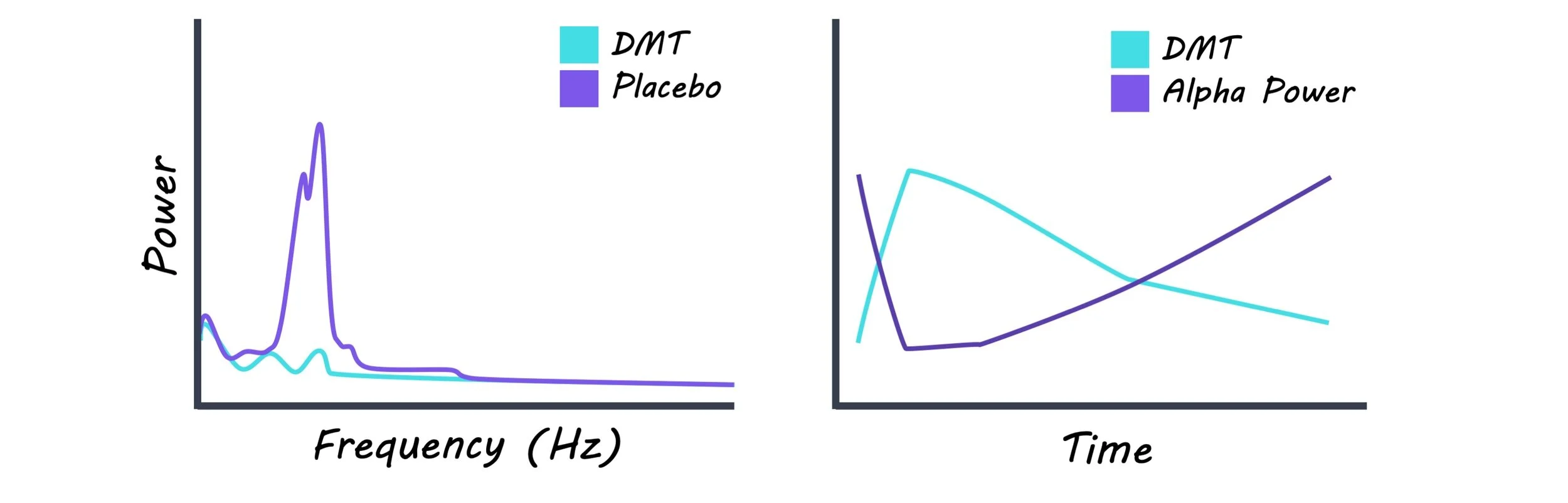
What is consciousness and what are the neural mechanisms that underlie it? We still don’t know the answer to these elusive questions. One exciting new avenue for studying the neurobiology of consciousness is to examine the altered states of consciousness produced by psychedelic drugs. For example, research has shown that LSD, psilocybin (the main psychoactive principle in magic mushrooms), and DMT (a naturally occurring psychedelic used in the ceremonial brew ayahuasca) consistently show broadband decreases in oscillatory power using EEG, particularly in alpha power (oscillations at approximately 8-12 Hz) which is linked to relaxation. Psychedelics have also been shown to increase the complexity or diversity of brain activity. DMT is a psychedelic of particular interest, as it produces one of the most unusual and intense altered states of consciousness, and has previously been likened to both dreaming and the near-death experience. This week in Scientific Reports, Timmermann and colleagues conducted the first ever placebo-controlled investigation of the effects of DMT on brain activity in humans at rest

How did they do it? 

To examine the effects of DMT on the brain at rest the authors collected EEG data on thirteen participants during a placebo session first and a DMT session a week later. Placebo or DMT was administered intravenously. The authors collected EEG data starting one minute prior to administration and ended 20 minutes post administration. Blood samples were collected at regular intervals throughout the EEG sessions. Three types of subjective effect measures were collected: (1) participants were required to give a real-time intensity rating of the subjective effects they experienced once every minute, (2) participants completed Visual Analogue Scales once the subjective effects had subsided, (3) the next day an independent researcher conducted a micro-phenomenological interview, designed to reduce subjective bias in first-person reports. 

What did they find? 

The authors’ primary hypothesis was that DMT would decrease oscillatory power in the alpha band and increase cortical signal diversity and that these effects would correlate with changes in conscious experience over time. Overall, their results support this hypothesis, as the authors found strong correlations between alpha and beta power decreases, real-time changes in the intensity rating of subjective effects of DMT, and DMT levels in plasma. They also found increases in delta and theta oscillations, which emerged during the peak of DMT’s effects. These findings suggest that the emergence of theta/delta rhythmicity combined with suppression of alpha/beta rhythmicity may relate to the ‘DMT breakthrough experience’, where the brain switches from processing external information to a state where processing is internally driven, which is also characteristic of dreaming during REM sleep.

DMT immersion also led to widespread increases in signal diversity which correlated with real-time changes in the intensity rating of subjective effects of DMT, and DMT levels in plasma. This is consistent with the ‘entropic brain hypothesis’ which proposes that within a limited range of states, the richness of content of a conscious state can be indexed by the entropy, or complexity, of spontaneous brain activity.  

eeg_Dec3.jpg

What's the impact?

This study is the first ever placebo-controlled investigation into the effects of DMT on brain activity in humans at rest. The finding that DMT results in decreased spectral power in the alpha/beta bands and widespread increases in signal diversity, both of which correlate with the subjective intensity of DMT’s effects, indicates that more work is needed to better understand how these findings relate to the neurobiology of consciousness. This study can also shed light on the mechanisms underlying DMT’s antidepressant effects, as depression has been linked to increased alpha power. Overall, this study advances our understanding of altered states of consciousness.

Timmermann et al. Neural correlates of the DMT experience assessed with multivariate EEG. Scientific Reports (2019). Access the original scientific publication here.