
Intervention During Adolescence Leads to Long-Lasting Rescue of Network Dysfunction in a Model of Schizophrenia

Post by Amanda McFarlan

What's the science?

Prefrontal cortex (PFC) maturation in late adolescence is known to be disrupted in individuals with schizophrenia. A key feature of this maturation process involves the synchronization of the PFC to other cortical and limbic brain regions through high-frequency oscillatory neuronal activity. This synchronization process is mediated by inhibitory neuron signaling from parvalbumin (PV)-expressing interneurons. The ventral hippocampus also plays a role in the maturation process of the PFC, by promoting inhibitory neuron signaling. Mouse models with chromosome 16 deletions, including the LgDel mouse model, have been useful in studying the pathological changes associated with the onset of schizophrenia. This week in Cell, Mukherjee and colleagues investigated whether cognitive and network dysfunction could be rescued in the LgDel mouse model of schizophrenia if treatments were administered during adolescence.

How did they do it?

To validate the LgDel mouse model as a model of schizophrenia, the authors investigated whether LgDel mice displayed similar phenotypes to those observed in humans with schizophrenia, namely, deficits in network synchronization and cognition. They used two behavioural approaches to test for impairments in cognition commonly associated with schizophrenia: goal-directed learning (associated with deficits in the PFC) and social recognition (associated with deficits in the hippocampus). To determine whether network synchronization was disrupted in LgDel mice, they recorded local field potentials in the medial PFC in awake, behaving animals and assessed the oscillatory activity of neurons in this region. Next, the authors used the PSAM/PSEM chemogenetic approach (allows for select activation of PV interneurons) to investigate whether PV interneuron signaling was disrupted in LgDel mice. Recording electrodes were implanted in the PFC of both LgDel mice and control mice to measure neural activity while selectively activating PV interneurons. Then, the authors tested whether the systemic administration of a dopamine receptor-2 antagonist (commonly used to treat the symptoms of schizophrenia) would rescue deficits in network function, cognition and PV interneuron signaling in LgDel mice. Next, they targeted the administration of dopamine receptor-2 antagonists to either two regions of the hippocampus (dorsal and ventral) or two regions of the PFC (medial PFC and the lateral orbital cortex) during several different time windows to determine the specific conditions that would allow for long-lasting effects from antipsychotic treatment. Finally, the authors investigated the role of PV interneurons in rescuing the LgDel mouse phenotype in late-adolescence by applying repeated chemogenetic activation of PV interneurons in either the medial PFC or ventral hippocampus between postnatal day 60 and 70 (late-adolescence).

What did they find?

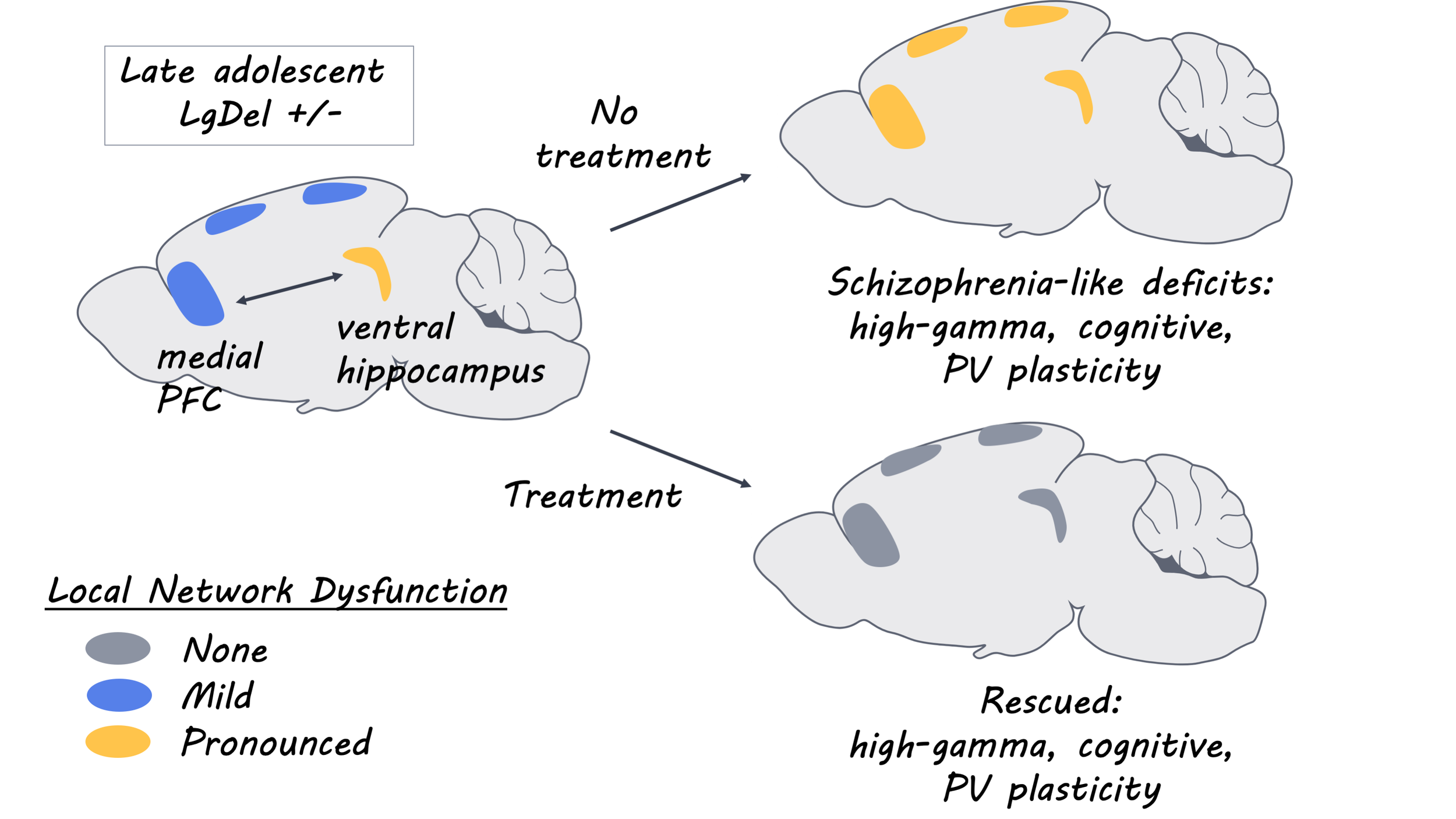
The authors determined that LgDel mice exhibit similar deficits in cognition as individuals with schizophrenia. They also found that, compared to controls, adult LgDel mice had a power deficit in the oscillatory activity of medial PFC neurons in the high gamma range, which may be indicative of a reduction in the activity of fast-spiking PV interneurons. In support of this, they revealed that interneurons had lower firing rates in LgDel mice compared to controls. Next, the authors showed that chemogenetic activation of PV interneurons in the medial PFC led to a robust increase in inhibitory neuron firing rates in control mice, but not LgDel mice, suggesting that PV interneuron signaling is disrupted in LgDel mice. Then, the authors determined that a single systemic dose of a dopamine receptor-2 antagonist in LgDel mice was able to transiently rescue the observed deficit in oscillatory activity in the gamma range and significantly improve performance during a social recognition task. Next, they found that targeted administration of a dopamine receptor-2 antagonist the ventral hippocampus or the medial PFC, but not the dorsal hippocampus or the lateral orbital cortex, led to long-lasting improvements in PV expression levels, PV interneuron activity and cognition. They showed that these long-lasting improvements only occurred if the dopamine receptor-2 antagonist was delivered in late-adolescence, suggesting that this period may be critical for treatment intervention. Finally, the authors revealed that repeated chemogenetic activation of PV interneurons targeted to the ventral hippocampus or medial PFC in late-adolescence resulted in similar long-lasting improvements in network activity and cognition as observed with dopamine receptor-2 antagonist administration. Together, these findings suggest that increasing the activity of PV interneurons within the medial PFC-ventral hippocampus axis during late adolescence may be critical to prevent progression to schizophrenia-like network and cognitive deficits in LgDel mice.
schizophrenia_rescue_img.png

What's the impact?

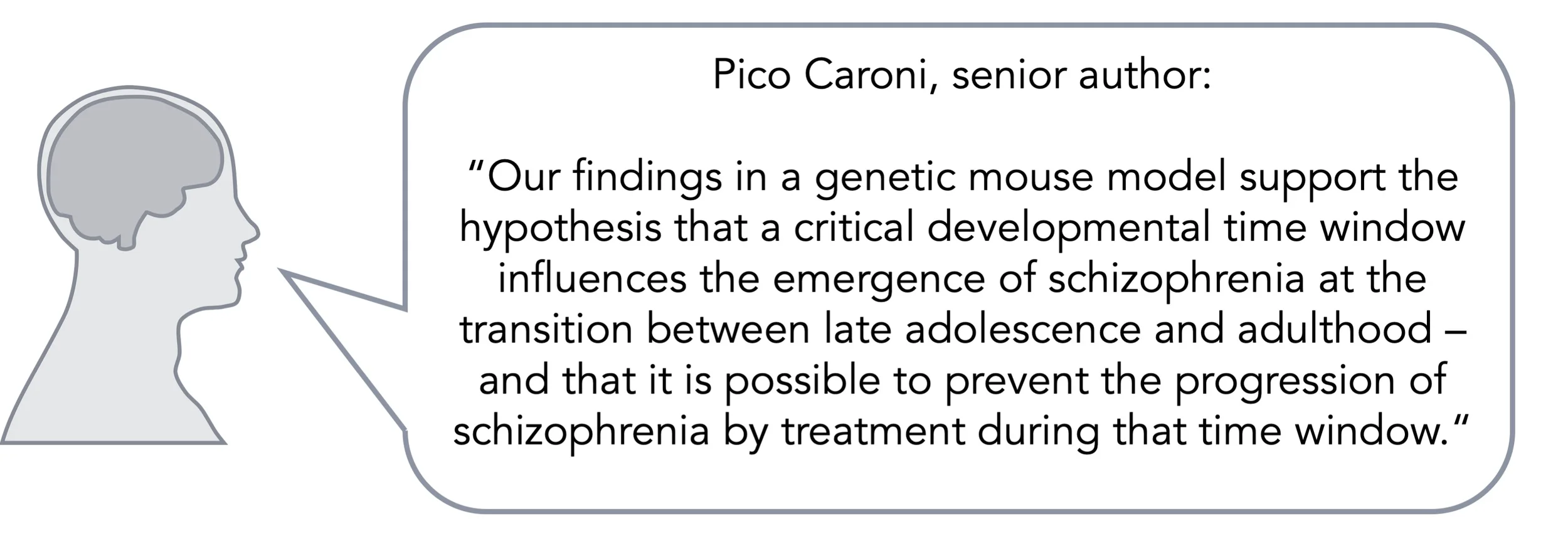
This is the first study to show that network deficits and cognitive impairments in LgDel mice can be prevented by targeted activation of PV interneurons in the ventral hippocampus and medial PFC during late adolescence. The authors showed that these improvements are long-lasting and can be achieved by chemogenetic activation of PV interneurons as well as administration of dopamine receptor-2 antagonists. Together, these findings provide insight into the mechanisms that may underly the pathological changes during late adolescence that lead to the onset of schizophrenia as well as potential treatments that may be useful to prevent progression to pathological changes in predisposed individuals.
caroni_quote.jpg

Mukherjee et al. Long-Lasting Rescue of Network and Cognitive Dysfunction in a Genetic Schizophrenia Model (2019). Access the original scientific publication here.
Default and Frontoparietal Control Network Connectivity Supports Internal Attention

Post by Elisa Guma

What's the science?

As humans, we spend half of our wakeful time attending to our inner world, engaging in thoughts that are unrelated to our external environment. This process, termed internally directed attention, is thought to recruit two distinct functional brain networks: the default network (DN) and the frontoparietal control network (FPCN). The DN is known to activate during internally directed processes (rest, memory retrieval, etc.), whereas the FPCN is known to be involved in control processes. The FPCN can be subdivided into two sub-networks, FPCNA, which is more implicated in internally directed attention, and FPCNB, which is thought to activate during goal-directed behaviours. It is largely unknown how these networks communicate with one another to support internally directed attention. This week in Nature Human Behaviour, Kam and colleagues use intracranial electrophysiological recordings to investigate the connectivity between these two brain networks in the context of internally directed attention.

How did they do it?

The authors recorded intracranial electroencephalogram (EEG) data in 12 individuals with intractable epilepsy who were being monitored to localize seizure onset prior to surgery. Electrodes were categorized to be part of the three networks DN, FPCNA, or FPCNB. Brain activity was recorded while subjects performed a task in which they listened to standard tones (more frequently played), or target tones (less frequently played). They performed the task twice, either with a focus on externally directed attention, in which they were instructed to respond to the target auditory tones, or with an internally directed attention, in which they were instructed to ignore the tones and simply focus on their thoughts. The authors examined differences in brain activity for electrodes within the DN, FPCNA and FPCNB during the two attentional conditions, as well as at different frequency bands of neural activity (theta, alpha, beta).

What did they find?

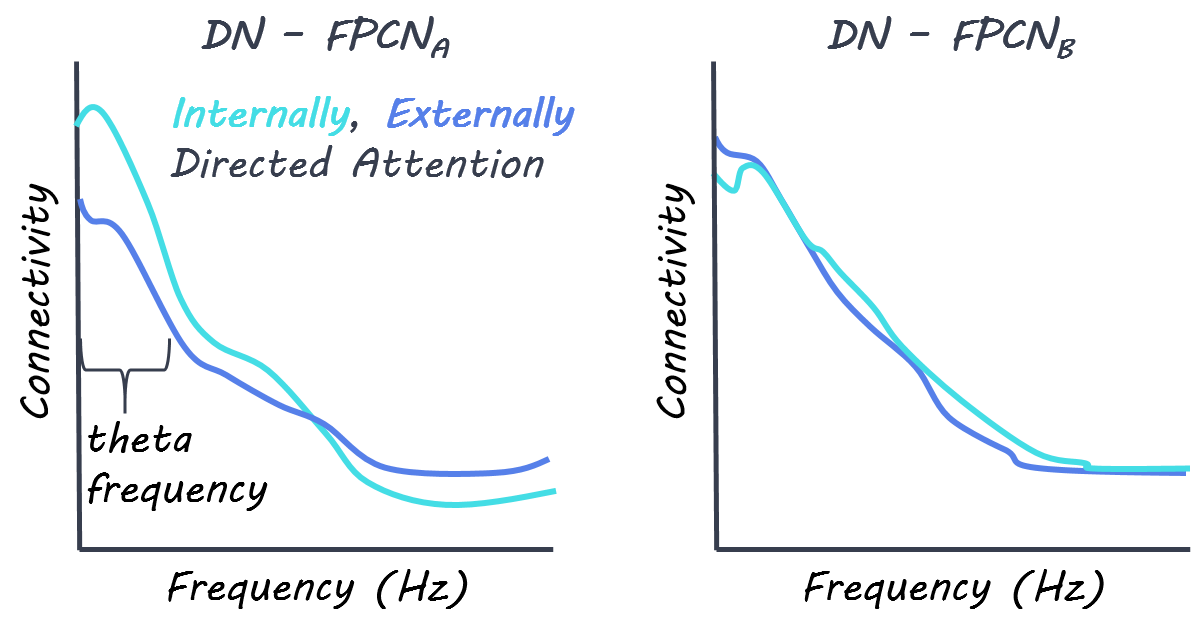
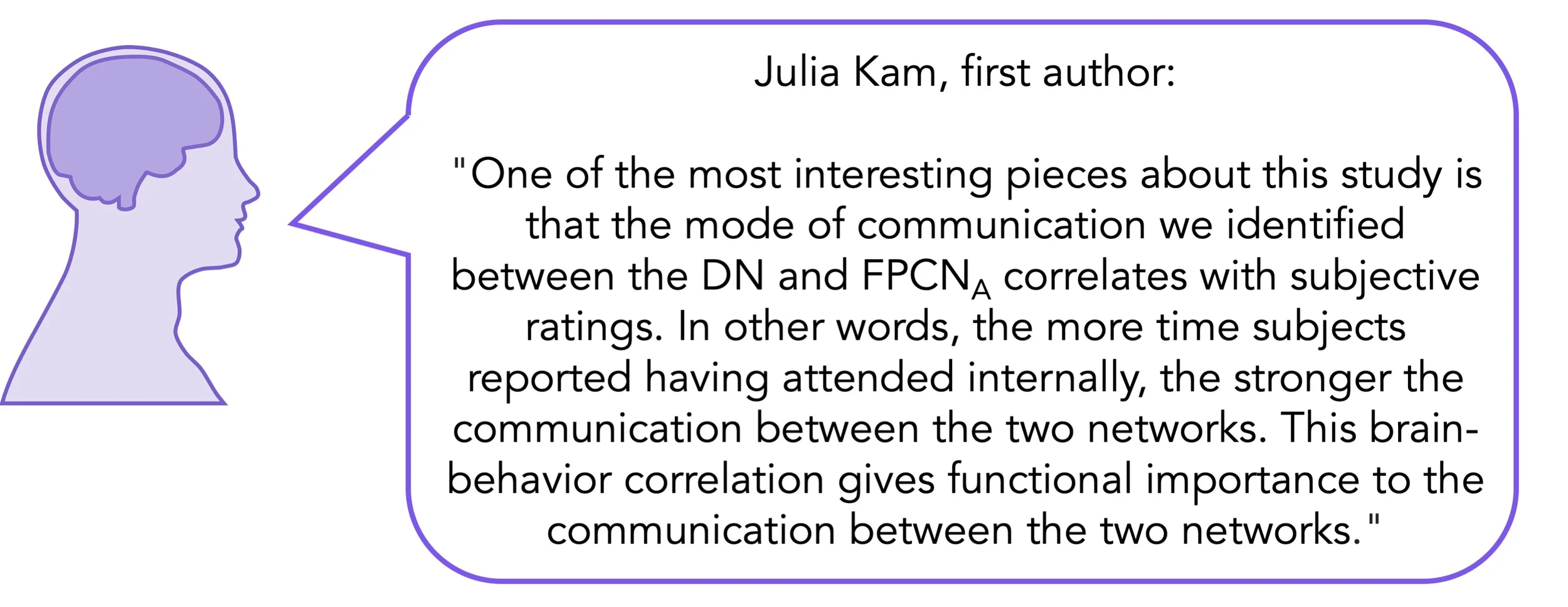
The authors first ensured that subjects were accurately performing the task by confirming high scores for correct hits and rejections on the externally directed attention portion of the task. Following quality control, the authors were left with 53 DN-FPCNA pairs and 49 DN-FPCNB pairs across subjects. They found that increased signal in a specific frequency band, theta, was observed in the internally directed compared to the externally directed attention condition. Further, they also observed increased connectivity at theta frequency between the DN-FPCNA pairs of electrodes during internally directed attention. In addition, the strength of the theta band connectivity between the two networks was correlated with the attention ratings for internally directed attention, underscoring its role in regulating this type of attention. Conversely, they found a peak in theta band frequency during the externally directed attention between the DN-FPCNB electrodes, highlighting the specificity of the DN-FPCNA connections in guiding internal attention.

Elisa (1).png

What's the impact?

This study found that internally directed attention relies on the interaction between the DN and FPCNA in the theta band frequency recorded using intracranial EEG. These rare intracranial EEG recordings confirm neuroimaging results, and further our understanding of the neural mechanisms underlying internally directed attention. They underscore the value of understanding these specific systems within the context of large-scale brain networks. Clarifying the way in which internal inputs are supported by connectivity between the DN and FPCN could be of interest for future work.

kam_quote.jpg

Julia W. Y. Kam et al. Default network and frontoparietal control network theta connectivity supports internal attention. Nature Human Behaviour (2019). Access the original scientific publication here.

Lifestyle Factors, Genetic Predisposition, and Dementia risk: A Long-Term Prospective Cohort Study

Post by Sarah Hill

What's the science?

Many diseases are believed to culminate from highly complex interactions between genes and environment. Dementia is no exception in this regard, though the degree to which genetics and lifestyle each contribute to the onset of the disease is currently an active area of research. Previous studies have examined the interplay between genes, health, and lifestyle in dementia, though most have concentrated on a single modifiable health factor (e.g. smoking, diet, etc.). There is a great need for research assessing the effects of multiple genetic and environmental risk factors simultaneously. This week in Nature Medicine, Licher and colleagues demonstrate that multiple modifiable factors associated with a healthy lifestyle are linked to reduced long-term risk of dementia in individuals with a low and intermediate genetic predisposition to the disease.      

How did they do it?

The authors acquired data from a large-scale prospective cohort study (the Rotterdam Study) containing demographic, health, lifestyle, and genetic information for 6,352 participants 55 years of age and older. Using genetic information in the dataset, they assessed the genetic risk of dementia for each subject based on which version (or allele) of the apolipoprotein E (ApoE) gene they carried and whether any additional known dementia-associated genetic mutations were expressed, stratifying individuals into groups of low, intermediate, and high genetic risk. They then assigned a modifiable risk score to each individual based on health and lifestyle and grouped participants into favourable, intermediate, and unfavourable profile groups. The modifiable risk score encompassed six health and lifestyle factors, including smoking status, depression status, diabetes status, physical activity level, level of social isolation, and diet. They also calculated an alternative modifiable risk score based on cardiovascular health to compare with the lifestyle-derived score. The risk of dementia was then computed for each group separately using a Cox proportional hazards model and competing risk models, statistical methods for relating the probability of dementia onset over time to numerous risk factors.    

What did they find?

As expected, dementia risk was higher in participants with a high genetic predisposition to the disease, as well as in individuals with unfavourable lifestyle profiles. Intriguingly, a favourable health and lifestyle profile was associated with reduced long-term risk of dementia in individuals with low to intermediate genetic predisposition to the disease, compared to those with unfavourable profiles. However, the same was not true for those at high genetic risk of dementia, such that no differences in dementia risk were detected in favourable, intermediate, and unfavourable lifestyle groups of highly predisposed individuals. Similar observations were made when the modified risk score was calculated from cardiovascular health. Taken together, these findings suggest that modifiable health and lifestyle factors are promising treatment interventions for those with low and intermediate genetic predisposition to dementia, but are likely ineffective at mitigating dementia risk in highly predisposed individuals.                                            

sarah (2).png

What's the impact?

This is one of the first and largest studies to examine the interplay between genes and multiple lifestyle factors simultaneously. These findings are important in contributing to our understanding of dementia risk, as the progression of dementia is thought to be a complex and multivariable process. Findings from this study are particularly valuable for guiding the design of future clinical trials for dementia.    

silvan.png

Licher et al. Genetic predisposition, modifiable-risk-factor profile and long-term dementia risk in the general population. Nature Medicine (2019). Access the original scientific publication here.