Lifestyle Factors, Genetic Predisposition, and Dementia risk: A Long-Term Prospective Cohort Study

Post by Sarah Hill

What's the science?

Many diseases are believed to culminate from highly complex interactions between genes and environment. Dementia is no exception in this regard, though the degree to which genetics and lifestyle each contribute to the onset of the disease is currently an active area of research. Previous studies have examined the interplay between genes, health, and lifestyle in dementia, though most have concentrated on a single modifiable health factor (e.g. smoking, diet, etc.). There is a great need for research assessing the effects of multiple genetic and environmental risk factors simultaneously. This week in Nature Medicine, Licher and colleagues demonstrate that multiple modifiable factors associated with a healthy lifestyle are linked to reduced long-term risk of dementia in individuals with a low and intermediate genetic predisposition to the disease.      

How did they do it?

The authors acquired data from a large-scale prospective cohort study (the Rotterdam Study) containing demographic, health, lifestyle, and genetic information for 6,352 participants 55 years of age and older. Using genetic information in the dataset, they assessed the genetic risk of dementia for each subject based on which version (or allele) of the apolipoprotein E (ApoE) gene they carried and whether any additional known dementia-associated genetic mutations were expressed, stratifying individuals into groups of low, intermediate, and high genetic risk. They then assigned a modifiable risk score to each individual based on health and lifestyle and grouped participants into favourable, intermediate, and unfavourable profile groups. The modifiable risk score encompassed six health and lifestyle factors, including smoking status, depression status, diabetes status, physical activity level, level of social isolation, and diet. They also calculated an alternative modifiable risk score based on cardiovascular health to compare with the lifestyle-derived score. The risk of dementia was then computed for each group separately using a Cox proportional hazards model and competing risk models, statistical methods for relating the probability of dementia onset over time to numerous risk factors.    

What did they find?

As expected, dementia risk was higher in participants with a high genetic predisposition to the disease, as well as in individuals with unfavourable lifestyle profiles. Intriguingly, a favourable health and lifestyle profile was associated with reduced long-term risk of dementia in individuals with low to intermediate genetic predisposition to the disease, compared to those with unfavourable profiles. However, the same was not true for those at high genetic risk of dementia, such that no differences in dementia risk were detected in favourable, intermediate, and unfavourable lifestyle groups of highly predisposed individuals. Similar observations were made when the modified risk score was calculated from cardiovascular health. Taken together, these findings suggest that modifiable health and lifestyle factors are promising treatment interventions for those with low and intermediate genetic predisposition to dementia, but are likely ineffective at mitigating dementia risk in highly predisposed individuals.                                            

sarah (2).png

What's the impact?

This is one of the first and largest studies to examine the interplay between genes and multiple lifestyle factors simultaneously. These findings are important in contributing to our understanding of dementia risk, as the progression of dementia is thought to be a complex and multivariable process. Findings from this study are particularly valuable for guiding the design of future clinical trials for dementia.    

silvan.png

Licher et al. Genetic predisposition, modifiable-risk-factor profile and long-term dementia risk in the general population. Nature Medicine (2019). Access the original scientific publication here.
Brain Microstructure and Metabolite Maturation and Capacity for Self-Regulation

Post by Stephanie Williams

What's the science?

During development, brain regions undergo changes in architecture and metabolite concentrations. It’s not always clear how these structural changes are related to the corresponding changes at the level of behavior. One aspect of cognition, self-regulation capacity, or the ability to monitor and control thoughts, emotions, and actions, is known to develop rapidly during development. This week in the Journal of Neuroscience, Nelson and colleagues use voxel-wise analysis of diffusion tensor imaging and Multiplanar Chemical Shift Imaging (MPCSI) data to characterize maturation in microstructure and metabolites across the brain, and their relationship to self-regulatory capacity.

How did they do it?

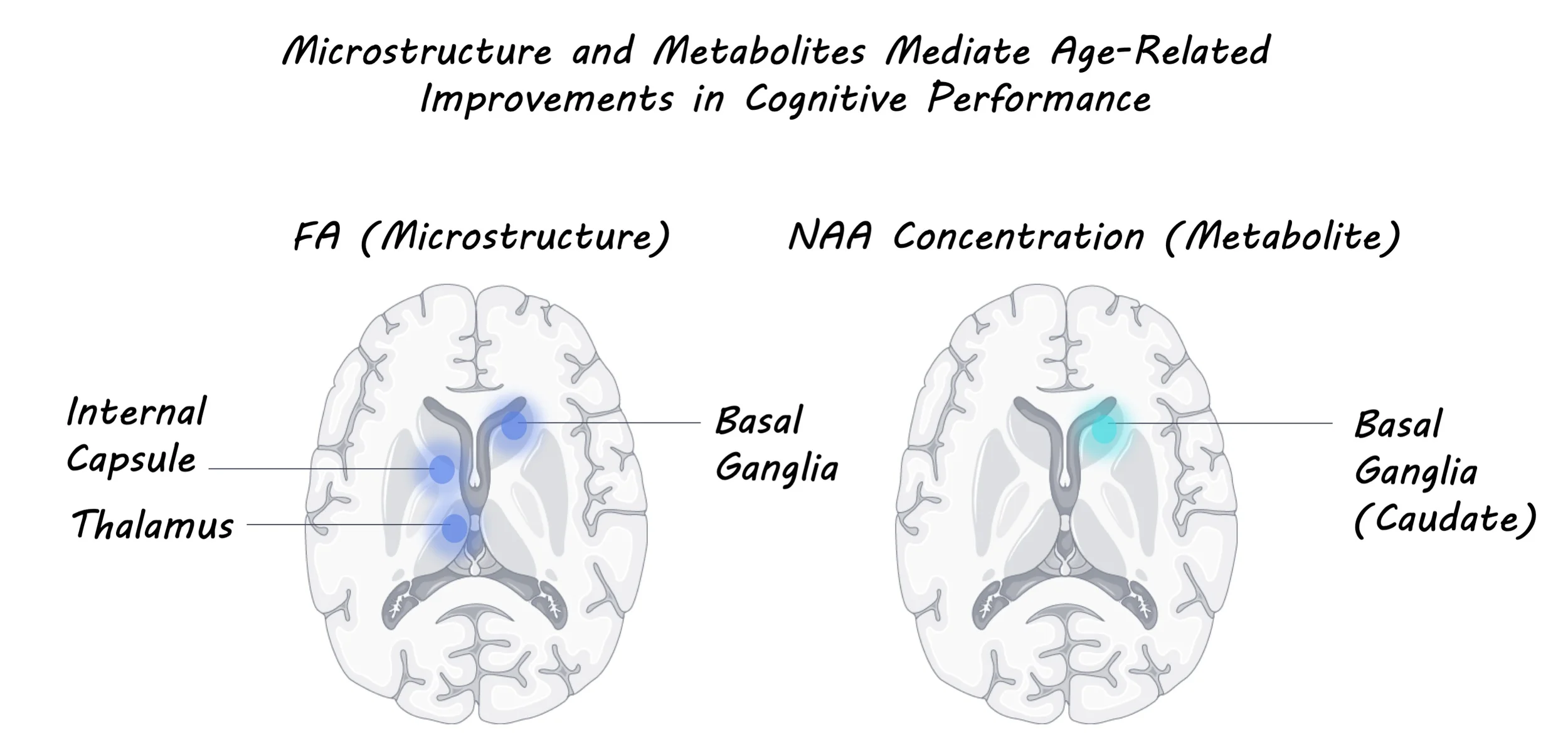
The authors investigated microstructure and metabolite maturation-related changes in the context of self-regulation capacity and general executive function in grade school-age racial and ethnic minority youth. To assess self-regulation capacity, the authors used data from a battery of cognitive assessments designed to probe attention, memory, executive functions, fine motor dexterity and visual-integration of the enrolled youth (~300 participants). The authors also examined white matter integrity and myelination with 1) diffusion imaging and- 2) multi-planar chemical shift imaging (~200 participants). Diffusion imaging shows how water is able to move through tracts in the brain as a function of its position. Multi-planar chemical shift imaging (MPCSI) offers high spatial resolution map of metabolite concentrations in the brain. The authors were interested in two measures from the diffusion data: 1) Fractional Anisotropy and 2) Apparent Diffusion Coefficient. Higher Fractional Anisotropy values in an area typically indicate greater structural integrity of the white matter tracts. They also analyzed several different brain metabolites with MPCSI, including N-acetyl-L-aspartate (NAA), which measures the density of viable neurons, Ch, which measures membrane turnover, and Glx, which measures energy metabolism, and Cr, which measures metabolic activity. The authors analyzed how cerebral microstructure and metabolite concentrations changed with age in a brain network that is known to support self-regulation, called the cortico-striato-thalamo-cortical loops (CSTC).

What did they find?

From the diffusion imaging analysis, the authors found that fractional anisotropy values were positively correlated with age in deep white matter bundles and in superficial cortical white matter in prefrontal and parietal cortex. These findings suggest that age is positively correlated with white matter maturation. Fractional Anisotropy was also positively correlated with age in several grey matter areas, including the anterior and posterior cingulate cortices, superficial grey matter, lenticular nucleus, caudate, thalamus, midbrain, medial occipital cortex, and cerebellum. Apparent Diffusion Coefficient, in contrast, was inversely correlated with age in several white matter and grey matter regions. The authors conclude from the strong positive correlation between age and higher Fractional Anisotropy values, along with the inverse correlations of age with Apparent Diffusion Coefficient values, that cellular maturation reduces diffusion in the radial direction of the fibre bundles. The authors hypothesize that age-related increases in myelination or axon packing density could be responsible for these changes. From their analysis on maturation-related metabolites, the authors found that NAA concentration was correlated with age in the dorsolateral PFC and inversely correlated with age in parietal white matter. NAA is involved in energy metabolism and higher NAA concentrations likely reflect increased energy metabolism. Age-related increases in NAA in grey matter regions, therefore, indicate structural or functional growth in those regions. Conversely, age-related decreases in NAA indicate pruning in those regions (parieto-occipital cortices). Importantly, the authors found evidence that the age-related microstructure changes were not accompanied by age-related alterations in white matter metabolite concentrations. They offer two possible explanations for this finding: 1) the transient changes in metabolite concentrations could have evaded detection by their statistical analysis, or 2) microstructure changes during development may not actually require significant metabolic changes, because myelin within white matter likely undergoes reorganization, rather than new synthesis, in these regions during pre-adolescence.

self_control.jpg

Together, these findings suggest that the improvements in executive functioning and self-regulatory ability in youth during maturation are supported by white matter maturation in frontal regions and subcortical projections, as well as simultaneous pruning in posterior regions.

What's the impact?

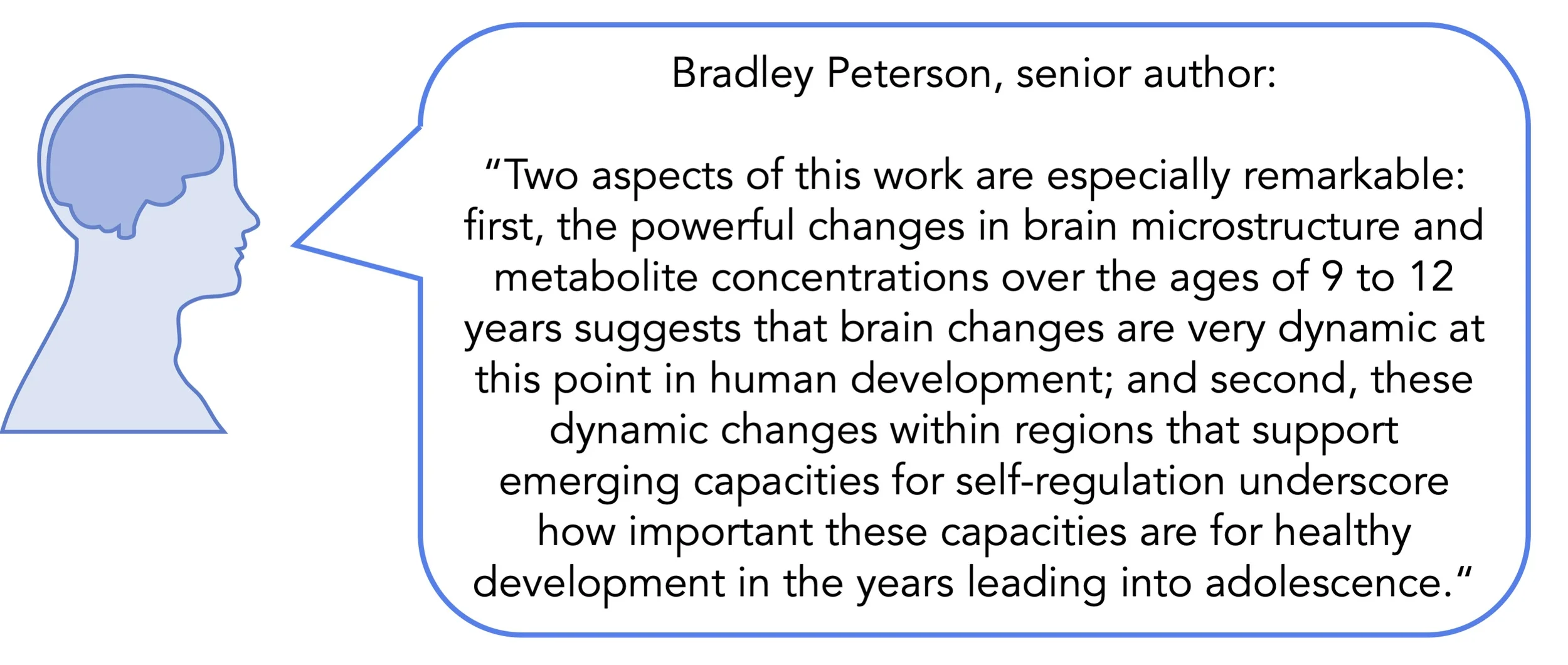
By combining these imaging modalities, the authors were able to pinpoint specific maturational changes in microstructure and metabolites that mediate performance improvements during the transition from late childhood to early adolescence. The authors also established normative values for microstructure and metabolite concentrations during this development period, which will allow future research to investigate aberrant development trajectories 

peterson_quote.jpg

Nelson, M, et al. Maturation of Brain Microstructure and Metabolism Associates with Increased Capacity for Self-Regulation during the Transition from Childhood to Adolescence. The Journal of Neuroscience (2019). Access the original scientific publication here.
Identification of a Novel Neural Circuit for Depressive Symptoms in Chronic Pain

Post by Lincoln Tracy

What's the science?

People with chronic pain (pain that lasts longer than three months) commonly also present with depressive symptoms. The combination of pain and depression can make it complicated for these patients to receive treatment, as depressive symptoms may result in longer-lasting and more intense pain. There are suggestions that the dysfunction of the brain’s serotonin system is related to both pain and depression. However, we lack a good understanding of how chronic pain may affect the functioning of the serotonin system and how this, in turn, might impact depressive symptoms. Previous evidence suggests that the central nucleus of the amygdala (CeA) is a likely convergence point between chronic pain and depression. This week in Nature Neuroscience, Zhou and colleagues aimed to identify the neural circuit underlying the comorbid depressive symptoms in chronic pain by investigating the functional organization of the CeA and the involvement of serotonin using viral tracing, electrophysiological, optogenetic, and chemogenetic methods.

How did they do it?

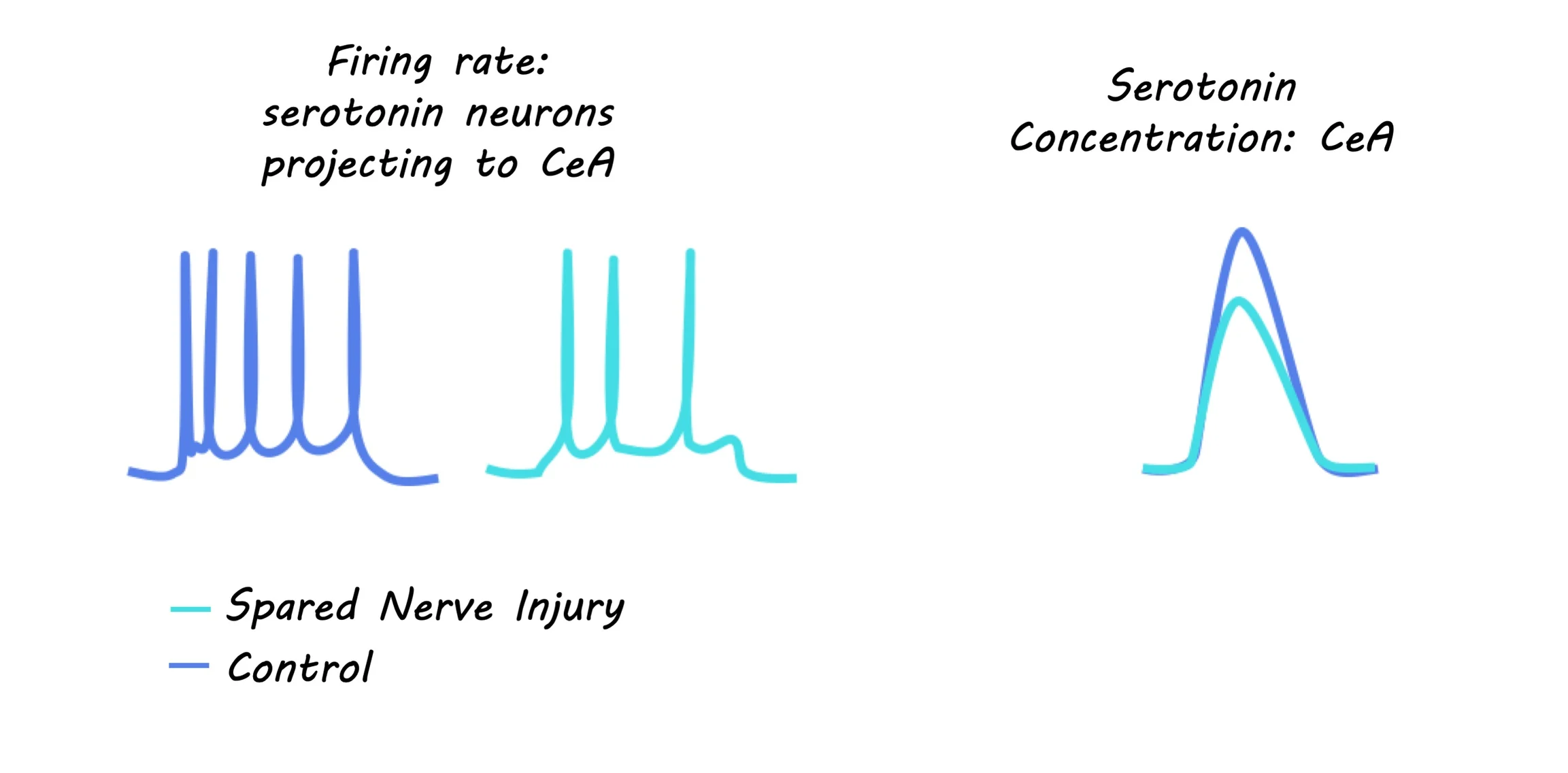
First, the researchers identified the types of neurons that project into the CeA and their function. Second, they used the spared nerve injury chronic pain model in mice to assess the potential role of the CeA-projecting neurons in comorbid depressive symptoms. The spared nerve injury model involves severing two of the three branches of the sciatic nerve; the nerve running from the back to the lower legs. Whole-cell recordings and in-vivo microdialysis high-performance liquid chromatography were used to record neuronal activity and determine the serotonin concentration, respectively. Third, they tested the functional causality of the DRN-CeA circuit in the development of depressive-like behaviors in mice. Fourth, they investigated which other areas of the brain the CeA neurons project to. Finally, they used resting state functional magnetic resonance imaging to assess whether the neural circuits underlying the depressive symptoms in the mouse model of chronic pain also play a role in the depressive symptoms seen in humans with chronic pain.

What did they find?

First, they found that serotonergic neurons from the dorsal raphe nucleus (DRN) project to somatostatin interneurons in the CeA. The neurons from the DRN inhibit the somatostatin interneurons in the amygdala. Second, they found that inhibiting the somatostatin neurons in the CeA reduced depressive behaviors in mice afflicted by the spared nerve injury. Third, they showed that the DRN-CeA circuit is required for the development of depressive-like behavior specifically in mice with chronic pain, but not in non-pain-related mouse models of depression. Fourth, they identified that the somatostatin neurons of the CeA mainly send glutamatergic projections to neurons within the lateral habenula, a region of the brain that has previously been implicated in the pathophysiology of depression. The authors also identified that the DRN-CeA-lateral habenula circuit connections form part of a disinhibitory circuit that may underlie the depressive symptoms seen in chronic pain. Finally, they found that humans with both chronic pain and depression display decreased brain connectivity between the DRN and the centromedial amygdala, the equivalent of the CeA in mice. The functional connectivity between these two brain regions showed a negative correlation with the Hamilton Depression Rating Scale score (a widely used measure of depression), meaning the lower functional connectivity, the greater the depression experienced.

week85.jpg

What's the impact?

This study found that a neural pathway involving serotoninergic neurons in the DRN, somatostatin neurons in the CeA, and the lateral habenula may be the cause of some of the aspects of the commonly occurring depression symptoms that occur in chronic pain. Activating this neural circuit relieved painful symptoms in mice. Pharmacological treatments for comorbid depressive symptoms in chronic pain are limited. Therefore, the findings from this study allow for the possibility of non-pharmacological treatment approaches (such as deep brain or transcranial magnetic stimulation) to target the converging pain and depression pathways.

zhang_quote.jpg

Zhou et al. A neural circuit for comorbid depressive symptoms in chronic pain. Nature Neuroscience (2019). Access the original scientific publication here