High Blood Pressure Is Associated with Late-Life Brain Pathology

Post by Deborah Joye

What's the science?

High blood pressure, also known as hypertension, is a common health issue in adults that tends to get worse with age. Hypertension in midlife (between 40 and 70 years of age) is also associated with increased risk for brain pathology later in life, including cerebrovascular disease (disorders that affect blood supply to the brain) and Alzheimer’s disease. But how might changes in blood pressure result in late-life brain pathology, and at what age are people most sensitive to these changes? This week in The Lancet Neurology, Lane and colleagues study longitudinal blood pressure changes and late-life brain scans, revealing that increases in blood pressure from early adulthood into midlife are associated with increased white matter hyperintensity volume and smaller brain volumes in late-life (around age 70).

How did they do it?

The authors analyzed data from Insight 46, a neuroscience substudy of over 5000 individuals born throughout mainland Britain during one week in 1946. Over the course of the study, blood pressure measurements were collected at ages 36, 43, 53, 60-64, and 69 years. From 2015 through 2018, the authors recruited close to 500 participants of Insight 46 (mean age 70.7 years) to undergo brain-imaging MRI scans and determine possible neurological changes. The primary measures were white matter hyperintensity volume, a marker of vascular disease in the brain; presence of amyloid-beta, a hallmark pathology in Alzheimer’s disease; whole-brain and hippocampal volumes, to determine possible reductions in brain size; and tests of episodic memory, processing speed, and global cognition using the Preclinical Alzheimer Cognitive Composite.

What did they find?

The authors found that increased systolic and diastolic blood pressure were associated with greater white matter hyperintensity volume at all measured ages, with a stronger association after 53 years of age. Higher systolic blood pressure across time points was associated with smaller whole-brain volume, and greater increases in systolic blood pressure between 36 and 43 years old were associated with smaller hippocampal volume. Interestingly, blood pressure at any age was not associated with the presence of amyloid-beta, and there were no consistent associations between blood pressure and scores on cognitive tests.

Deb (4).png

What's the impact?

This study is the first to examine blood pressure at multiple timepoints and associate blood pressure changes with systematically measured brain pathologies and volumes. The authors show that early adulthood into midlife may present a sensitive period where rapid increases in blood pressure can affect brain pathologies such as white matter hyperintensities in later life. It should be noted that the participants of this study were exclusively white British participants broadly representative of the population of mainland Britain born in 1946; however, this may reduce generalizability to other ageing populations. These findings suggest that blood pressure management may need to begin at or before age 40 to prevent negative impacts on late-life brain health.

Lane et al., Associations between blood pressure across adulthood and late-life brain structure and pathology in the neuroscience substudy of the 1946 British birth cohort (Insight 46): an epidemiological study, The Lancet Neurology (2019). Access the original scientific publication here.

Antidepressant Efficacy Is Linked to Functional Connectivity of Brain Regions Involved in Cognitive Control

Post by Shireen Parimoo

What's the science?

Major depressive disorder (MDD) includes symptoms like difficulty concentrating, changes in sleep and appetite, and reductions in cognitive control. Many medications for depression exist, but the treatment process is often complicated, due to the heterogeneity in patients’ responses. Moreover, different classes of antidepressant medications have different neurobiological effects on the brain. Depression is associated with altered neural connectivity, including between brain regions involved in cognitive control like the dorsolateral prefrontal cortex (DLPFC) and the supramarginal gyrus (SMG). This altered connectivity is related to performance on tasks where inhibiting a response is needed, or flexible, adaptable behavior is required. Past research suggests that the functional connectivity of cognitive control regions may be related to the efficacy of different medications. This week in Biological Psychiatry, Tozzi and colleagues used functional magnetic resonance imaging (fMRI) during a clinical trial to examine the relationship between functional connectivity and the efficacy of different classes of antidepressants.

How did they do it?

Participants included 124 patients diagnosed with MDD and 59 healthy controls matched on age and sex. Patients were randomly assigned to receive one of three antidepressants: sertraline, venlafaxine-extended release, or escitalopram. All participants performed a go/no-go task (see below) while undergoing fMRI scanning during both a baseline session and a post-treatment session 8 weeks later. Patients were additionally assessed on the severity of their depressive symptoms at two different time points to determine whether their symptoms improved following the treatment. Those who showed greater than 50% improvement in symptom severity were classified as “responders”, and those who didn’t were classified as “non-responders”.

In the go/no-go task, participants were instructed to respond to the word “PRESS” by pressing a button when the word was shown in a green font (“go” trials) but withhold their response when the font was red (“no-go” trials). A comparison of brain activity during no-go and go trials revealed greater activation in cognitive control regions like the right SMG, the left orbitofrontal cortex (OFC), and the right middle temporal gyrus (MTG). The authors used generalized psychophysiological interaction analysis to examine the functional connectivity between these regions. They compared the findings across the patient and control groups, within participants at the different time points, and between responders and non-responders within each treatment group.  

What did they find?

Task performance was similar in MDD patients and healthy controls, and across the three treatment groups. Sertraline responders had higher connectivity between the SMG and the MTG and between the DLPFC and the SMG on no-go trials at baseline compared to healthy controls, whereas venlafaxine responders had lower connectivity between these pairs of regions. Sertraline responders also had greater connectivity between the DLPFC-SMG and the SMG-MTG compared to non-responders and higher connectivity between the cerebellum and anterior insula compared to non-responders and healthy controls. The enhanced connectivity in sertraline responders was associated with greater symptom improvement following treatment. The opposite pattern was observed among venlafaxine responders, who had reduced connectivity between these regions, which was related to a larger improvement in symptom severity. Thus, patients with higher connectivity between cognitive control regions responded better to sertraline, whereas those with lower connectivity responded more to venlafaxine. Functional connectivity in the escitalopram group did not differ from healthy controls at baseline and was not associated with response outcome. 

Shireen (1).png

Functional connectivity at baseline was related to improvement in symptom severity in the sertraline and venlafaxine groups. Compared to baseline, sertraline responders showed a reduction in the connectivity between the left precentral gyrus and the left superior temporal gyrus at the post-treatment scan. In contrast, venlafaxine responders had increased connectivity between the left OFC and the brainstem, and between the left OFC and the left caudate nucleus. Importantly, functional connectivity changes among sertraline and venlafaxine responders were linked to symptom improvement and were only observed on no-go trials, suggesting that the antidepressants had a specific effect on the brain regions involved in response inhibition.

What's the impact?

This study is the first to show that individual differences in the connectivity of the cognitive control network during response inhibition are linked to the efficacy of different classes of antidepressant medications. These findings have important implications for how clinicians might prescribe antidepressants in the future and open the door for exciting new research on the development of targeted treatment plans for MDD patients.

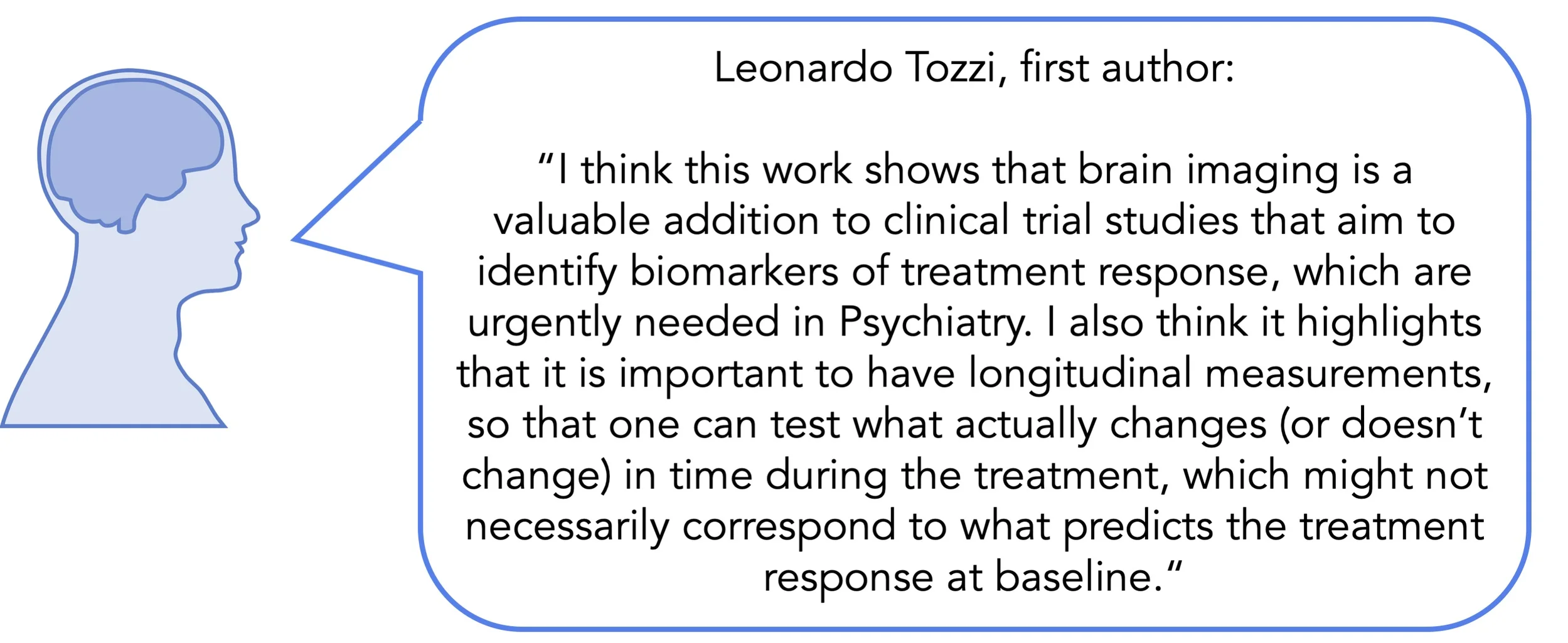
Tozzi_quote.jpg

Tozzi et al. Connectivity of the cognitive control network during response inhibition as a predictive and response biomarker in major depression: evidence from a randomized clinical trial. Biological Psychiatry (2019). Access the original scientific publication here.
Making the Best Choice Between Multiple Options

Post by Deborah Joye

What's the science?

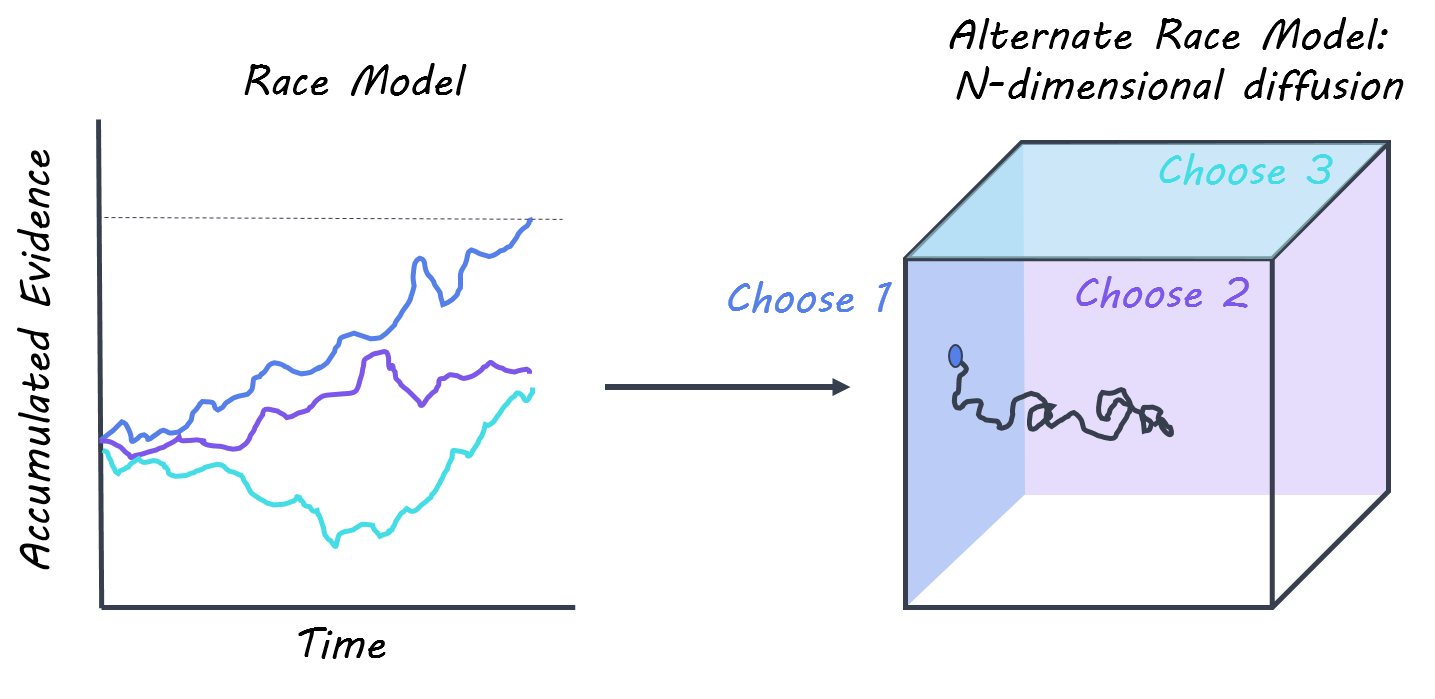
The ability to make decisions is an important part of survival. But how do individual neurons or the brain as a whole calculate what the best choice is? Researchers have described how choosing between two things might occur, but whether that process is the same for choosing between more than two options is not known. One possible decision-making model involves a “race” concept where evidence in favor of each option is accumulated over time until a decision threshold is reached, triggering a choice. But this model assumes that each option accumulates evidence independently and that the decision criteria remains the same across time and options. The nervous system is also much more complex than the “race” model suggests. For example, possible options can influence the perceived value of other choices, a process called value normalization. The nervous system may also involve a “global urgency signal” which decreases the amount of evidence needed to trigger a decision as time elapses. This week in Nature Neuroscience, Tajima and colleagues use tools from dynamic programming to present a model for optimal decision-making between multiple choices. The authors describe an extended race model that considers how alternative choices interact over time and how a global urgency signal increases the likelihood of a decision as time elapses.

How did they do it?

The authors built a mathematical model that describes how a decision-maker accumulates evidence for each choice option over time, how choice options interact with one another, and when the decision-maker should stop accumulating evidence and make a choice. The evidence accumulation part of the model involves summing together noisy moment-to-moment evidence for each choice over time. To identify the optimal strategy to stop accumulating evidence, the authors designed a 'value function’ which is a mathematical function that calculates the expected reward for being in a certain state at a given time. Their value function considers maximum expected reward minus the cost of accumulating evidence over time (for example, a metabolic cost associated with continuing to gather evidence) and compares the value of deciding immediately versus accumulating more evidence and deciding later. Solutions to these equations and the points at which they intersect to produce a multi-dimensional space with decision boundaries which, once crossed, indicate that option is chosen. Importantly, the authors’ value function considers the passage of time and models how decision boundaries change as time elapses. Overall, this leads to a fairly complex optimal decision-making strategy. To propose a simpler, close-to-optimal strategy, the authors use the insights gained from the dynamic programming solution to design a model neural circuit to implement their optimal decision-making policy and describe how their modelled data matches collected behavioral data.

What did they find?

When the authors simulated the basic “race” model versus “race” models that considered how options affect one another over time (normalization), how the decision boundaries change over time (urgency signal) or both, they found that the best model requires both normalization and urgency. Interestingly, they found that the inclusion of normalization alone improved reward rate more than the inclusion of urgency alone, demonstrating the importance of considering how the value of different choice options interact over time. The authors also found that data output from their model closely resembled previous physiological and behavioral findings. For example, when their model was optimized for maximum reward rate, the authors found that average activity across all accumulating neurons increased over time, replicating the physiological urgency signal that increases the likelihood of a decision over time. The authors also found that increasing the number of options in their model resulted in a decrease in average neural activity and increased reaction time. This replicates physiological and behavioral data demonstrating that more options mean the decision-maker (whether it’s a person or a neuron) accumulates evidence more slowly and takes more time to decide. Their optimal reward model also replicates seemingly “irrational” behaviors in humans and animals such as estimating the value of two top choices depending on the value of a third option, even if the third option is not valued enough to ever be chosen (violating the idea of independence of irrelevant alternatives) or that adding extra options can increase the probability of selecting an existing option (violating the regularity principle).

Deb (3).png

What's the impact?

This study provides a cohesive model for optimal decisions between more than two options. Importantly, the model replicates data from previous behavioral studies as well as seemingly “irrational” choice behaviors that other decision models do not explain. These findings provide a new perspective on decision-making that considers changes over time and brings together contrasting models. This model also produces interesting predictions that can be tested behaviorally and physiologically in future experiments.

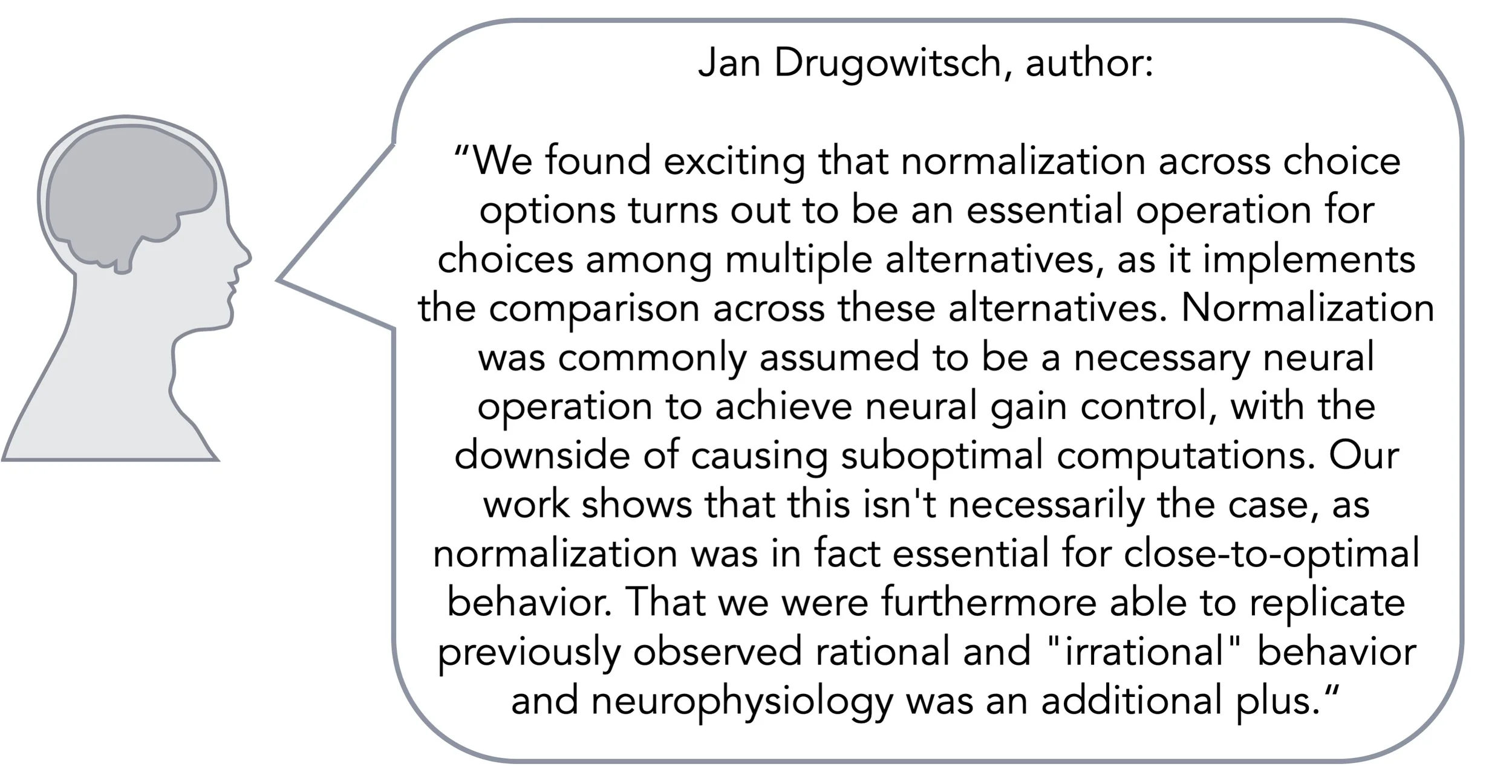
optimal_decisions_quote.jpg

Tajima et al., Optimal policy for multi-alternative decisions, Nature Neuroscience (2019). Access the original scientific publication here.