Trait Anxiety Affects Our Cognitive Appraisal of Fear

Post by Elisa Guma

What's the science?

Anxiety, often described as an enduring state of apprehension, is thought to be an emotional state independent of fear that influences our behaviour in response to threat. It is thought that the neural response to less imminent or ‘cognitive’ threats involves the ventral hippocampus and the ventromedial prefrontal cortex, whereas the response to more immediate or ‘reactive’ threats involves mid-brain regions such as the periaqueductal gray. This week in Nature, Fung and colleagues set out to investigate whether trait anxiety selectively affects cognitive and reactive fear circuits in response to a threatening stimulus.

How did they do it?

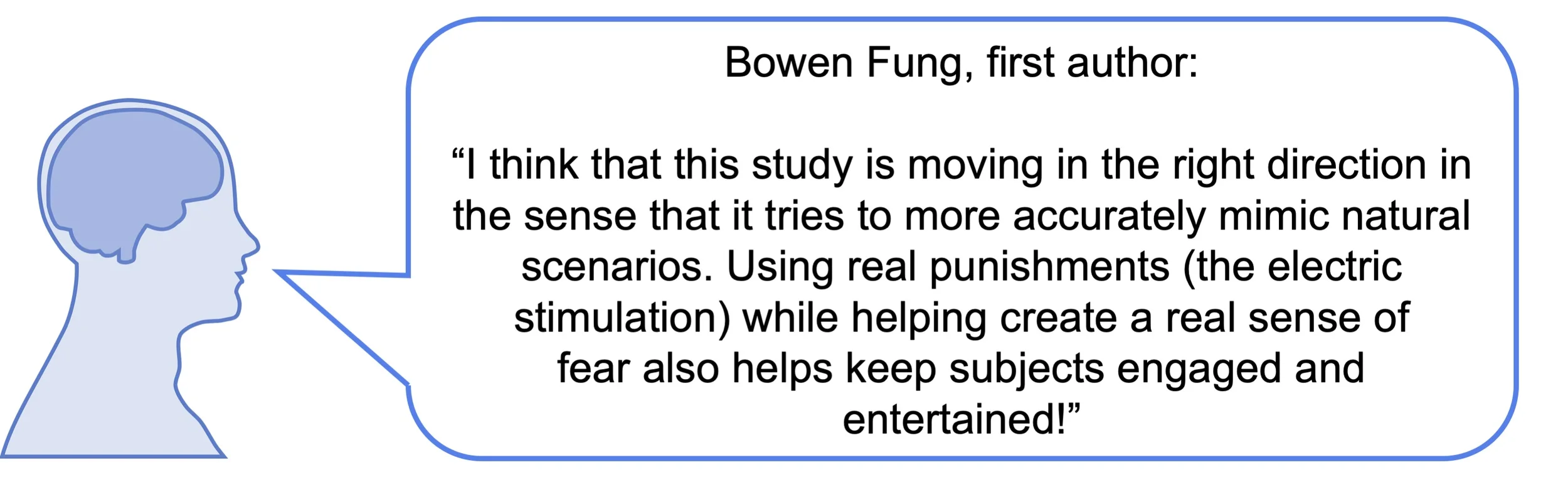
To investigate this question, healthy adults for whom trait anxiety was measured, were tested on a behavioural task in which the goal was to successfully escape different predators, while maximizing money earned by fleeing as late as possible from an attack. In each trial, participants passively earned money while they encountered virtual predators of three colours, representing different attack distances: fast, medium, or slow. Fast attack predators quickly switched from a slow approach to a fast attack, requiring subjects to make quick escape decisions. Slow attack predators slowly approached for longer time periods, allowing participants more time to contemplate an escape. Subjects were given electrical stimulation when they were caught by the virtual predators. In order to measure contributions of the ‘reactive fear’ and cognitive fear’ networks to escape decisions, subjects performed this task while undergoing functional magnetic resonance imaging (fMRI), which measures blood oxygen level dependent (BOLD) changes (or changes in blood flow) throughout the brain, as a reflection of underlying neural activity.

With these data, the authors investigated how trait anxiety affected escape decisions based on predator attack speed. Next, they investigated the effects of trait anxiety on escape success as well as total earnings for the different predator types. For the fMRI data, they investigated the 2 seconds before the escape to examine neural circuitry involved in the anticipation of an escape response. Finally, they also investigated the interaction between brain regions involved in escape decisions by performing a seed-based connectivity analysis. This measures the correlation between patterns of activity in a ‘seed’ region (or region of interest), with activity in the rest of the brain. They chose the ventral hippocampus as a seed region given its critical role in cognitive fear and anxiety.

What did they find?

First, the authors found a significant interaction between the slow predator type and trait anxiety score, suggesting that trait anxiety affected the escape time only for slow predators, potentially via the ‘cognitive’ fear circuitry. More specifically, with every unit of increase in state anxiety there was a 5% increase in the chance of fleeing from a slow predator. Therefore, higher trait anxiety was associated with a greater likelihood of the participant escaping earlier when given enough time to prepare an escape.
elisa.png

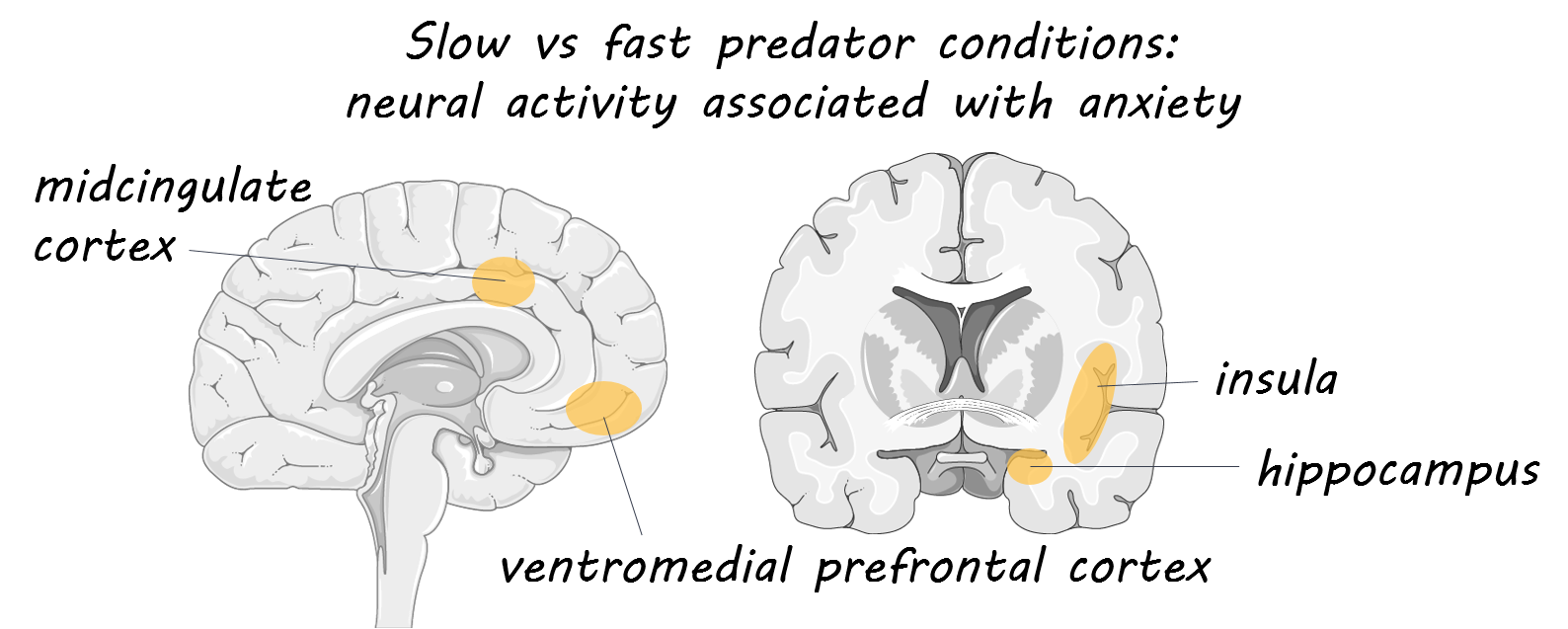
Participants with higher trait anxiety were more likely to successfully escape in the slow predator conditions, but not in the medium or fast. However, this negatively impacted how much money they earned in the task because they were more likely to escape before individuals with lower trait anxiety. The authors found a significant BOLD response in regions often associated with fear and anxiety including the amygdala, hippocampus, ventromedial prefrontal cortex, and midcingulate cortex for higher trait anxiety and slow predators. Their seed-based analysis revealed that trait anxiety significantly influenced the coupling between the ventral hippocampus seed, and the bilateral medial prefrontal cortex, right inferior frontal gyrus, and left insula suggesting that anxiety affects these circuits during escape decisions involving slow predators. These areas have previously been shown to be involved in behavioural flexibility and information processing in fear response, so their role in cognitive fear appraisal is fitting. In addition, research from both human and non-human animal work has shown that activity of the ventral hippocampus and medial prefrontal cortex becomes more synchronous in environments that increase anxiety.

What's the impact?

The authors provide compelling evidence in support of the idea that trait anxiety affects behaviour only when there is sufficient time to perceive and recognize a threat, but not when threats require an immediate reactive response. It is possible that the influence of trait anxiety on escape decisions could influence survival outcomes such that individuals with higher trait anxiety escape predators earlier. Future work may apply this task to individuals with anxiety disorders, such as post-traumatic stress disorder, to try to understand in what ways their cognitive and reactive fear responses are affected, which may in turn allow for tailored treatments and interventions.
Fung_quote_June4.jpg

Fung et al. Slow escape decisions are swayed by trait anxiety. Nature (2019). Access the original scientific publication here.

Songbirds Teach Us About Brain Areas Involved in Vocal Learning

Post by Anastasia Sares

What's the science?

Vocal learning is at the core of human linguistic and musical abilities, allowing us to imitate sounds produced by others and use them for communication. Only a few other species are capable of vocal learning, and songbirds are one such species. This makes the songbird an excellent model organism to help scientists characterize vocal learning circuitry in the brain. A number of brain regions have been identified as crucial to this process— a central one is Area X, within the basal ganglia (structures responsible for learning and initiating behavior). Other notable regions in the vocal learning circuit are involved in receiving auditory inputs (AIV), coordinating motor output (the RA), and processing motivation and reward (VTA). However, we still don’t have a full picture of how this ensemble functions and how different brain regions might be involved. This week in Neuron, Ruidong Chen and colleagues showed that another area in the basal ganglia of birds, the ventral pallidum (VP) was an important part of the vocal learning system.

How did they do it?

The authors combined data from anatomical tracing, electrical stimulation, lesions, and response to distorted auditory feedback to demonstrate the importance of the ventral pallidum.

To trace the connections of neurons between different regions, they used two methods. The first was retrograde tracing with viruses: in this technique, special viral proteins are modified to be fluorescent and then injected in the target region. They naturally climb backwards from the end of a neuron and cause the region of origin to light up. The second method is antidromic spiking: it’s a similar concept but with electric signals. Stimulating the target of a neuron causes electrical signals to move backwards up it, and these backwards-moving charges can be recorded at the region of the neuron’s origin. Once they mapped out the system, they tested how the VP reacted to singing and vocal errors. Again, the authors employed a two-pronged approach. First, they performed a surgery to disrupt the function of the VP (lesion) and observed its consequences on the bird’s song development. Second, they implanted recording electrodes in the VP and put birds into an enclosed environment with speakers that would play back a distorted version of the bird’s song at specific points while the bird was singing. Finally, they also played the bird’s own song back when it wasn’t producing any song, which should only activate audition-related areas.

What did they find?

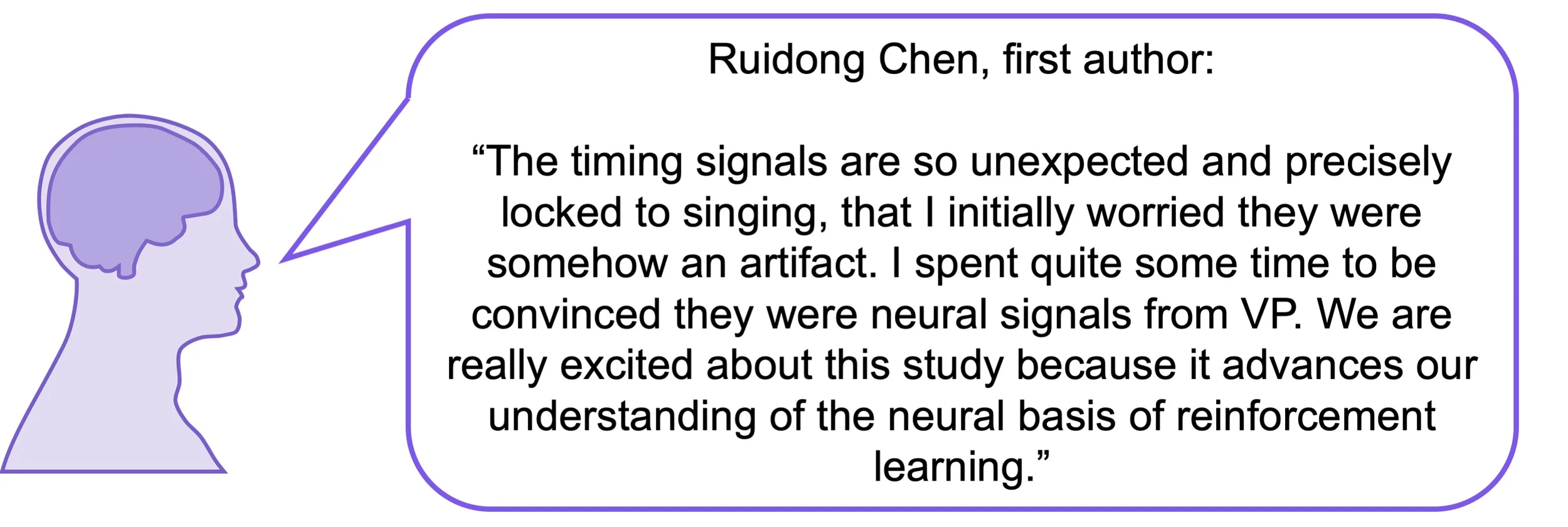
The authors found anatomical and functional evidence supporting the idea of a loop in the songbird vocal learning system incorporating the ventral pallidum (Area X→VP→VTA→Area X). The VP also received inputs from a variety of vocal learning areas. Disrupting the VP in juvenile birds resulted in abnormal song learning, indicating that it was a necessary part of the learning network. Some neurons in the VP were related to auditory information in general, as they fired during song performance and during a song played back to them later. Other neurons seemed to be calculating and responding to singing errors. During singing, these neurons responded to differences between distorted sounds and undistorted sounds, but they did not respond to songs or movement in general. Signals from these error-detecting neurons were the ones that  left the VP and traveled to their next stop (the VTA).

anastasia (1).png

What's the impact?

This research adds the VP in the middle of a complex neural network controlling vocal learning, helping to map out its relationship with other already-established areas. Though the VP is usually thought of as a region processing emotion, reward, and motivation, the authors contend that it can act as an internal “critic,” helping the birds to continuously refine their songs. Since the basal ganglia are fairly well preserved across species, studying these circuits will help us understand what is going on in human vocal learning as well. Further research into these systems may help us to understand internally-driven learning processes more generally.

Chen_quote_June4.jpg

Chen, Ruidong et al. Songbird Ventral Pallidum Sends Diverse Performance Error Signals to Dopaminergic Midbrain. Neuron (2019). Access the original scientific publication here.
The Brain Represents Others as a Summation of Their Mental States

Post by Flora Moujaes

What's the science?

To be successful in life it helps to take people’s individual dispositions into account. For example, a good teacher will tailor their teaching strategy to the temperament of the student, encouraging shy students to participant more while challenging the assumptions of overconfident students. However, we still don’t have a clear picture of how people tailor their actions to the idiosyncrasies of specific individuals. Traditionally, it has been assumed that people may do this by representing others using traits: the unchanging characteristics that define someone, such as trustworthiness or intelligence. More recently, it has been suggested that people represent others using summed states: feelings people experience on a moment-to-moment basis, such as happiness or shame. There are three main reasons that representing others using states may be advantageous (1) states are easier to observe than traits, as they can be seen in the moment rather than having to get to know someone over a long period of time, (2) states, even if unrelated to a person’s general disposition, are an independently useful for predicting behaviour, and (3) by summing someone’s mental states over time, one can infer long-term characteristics or traits.

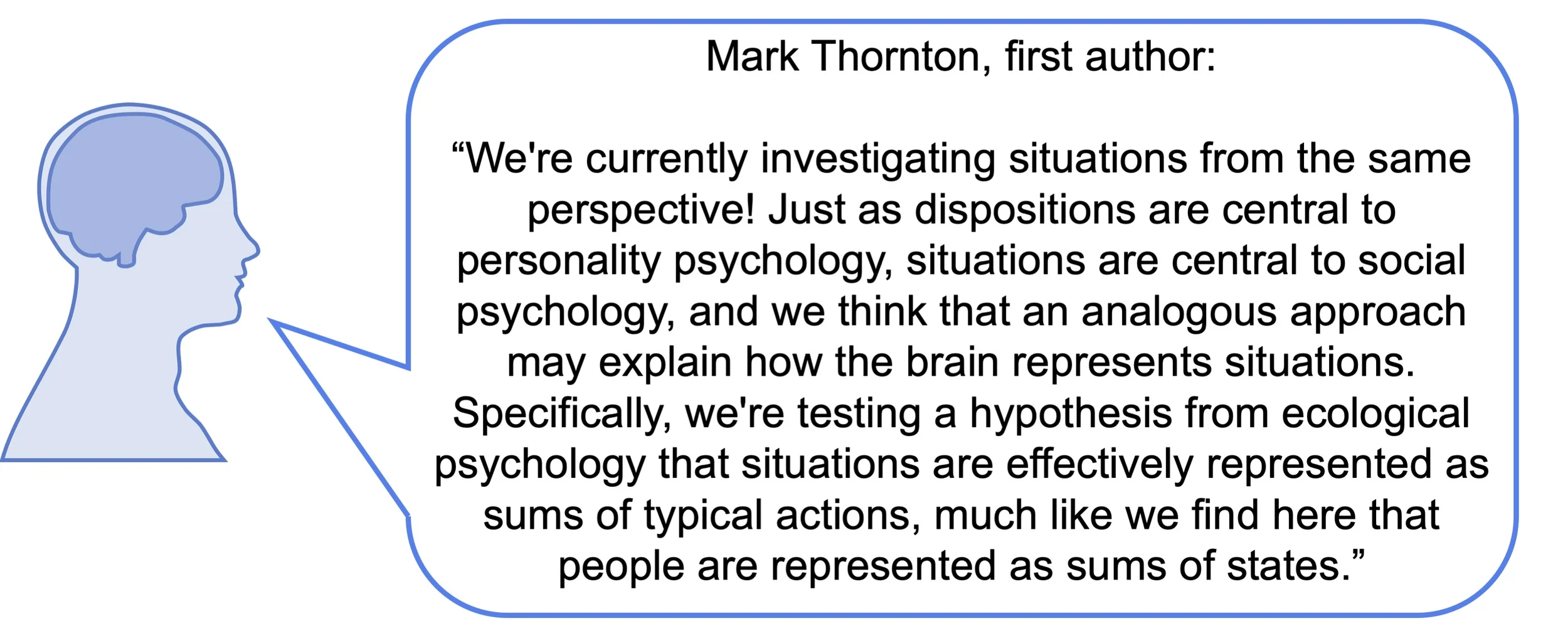
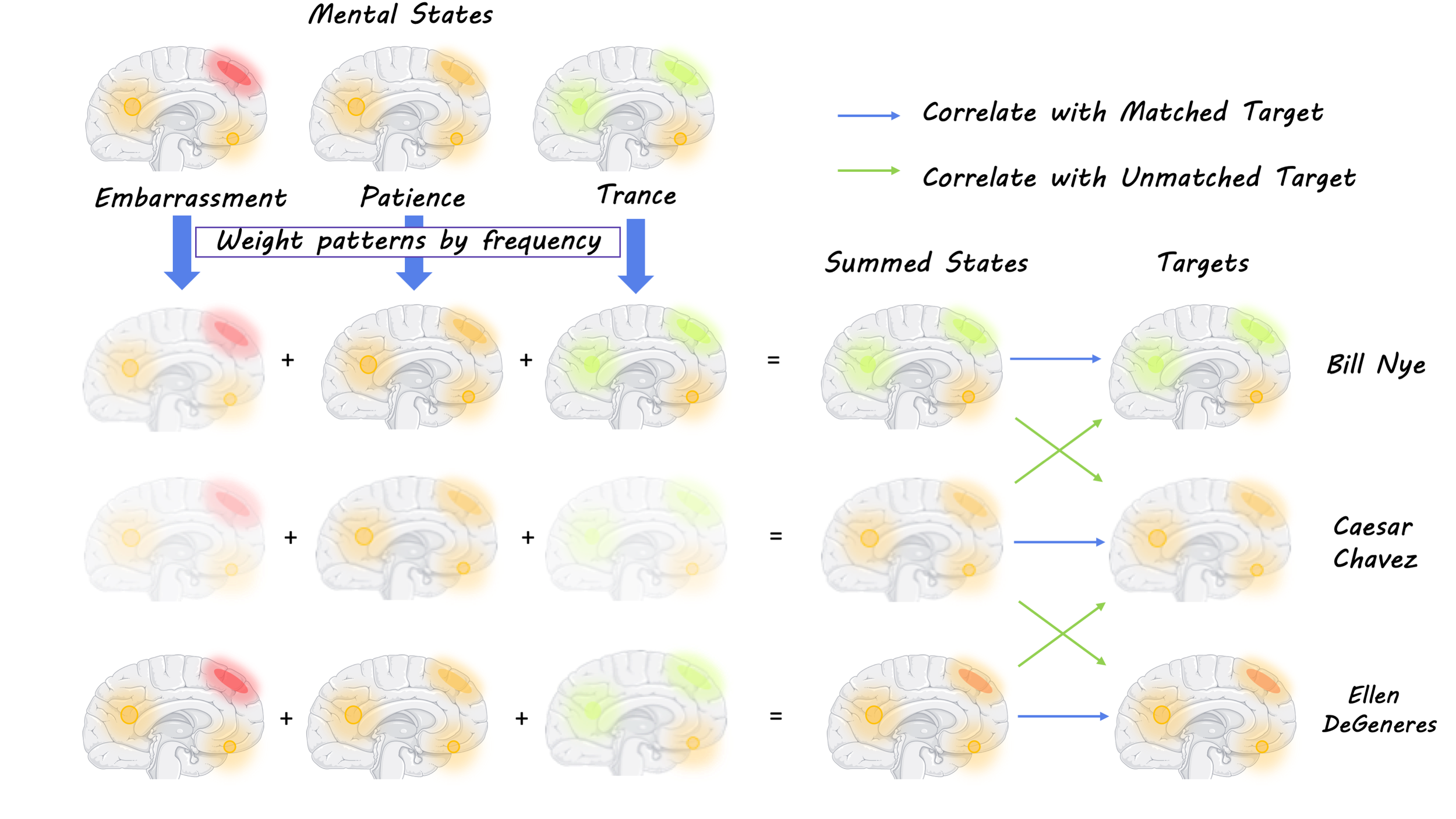
This week in Nature Communications, Thornton and colleagues demonstrate in an fMRI study that we represent other people as the sum of their moment-to-moment states, as our neural representations of other people are composed of combinations of representations of the mental states those people are perceived to frequently experience.

How did they do it?

To explore the hypothesis that the brain represents others according to a sum of their states, the authors began by establishing the pattern of brain activity associated with 60 different celebrities, from Shakespeare to Snoop Dog, based on the states people associated with each celebrity. To do this they first conducted an fMRI experiment to establish what patterns of activity are elicited when the brain thinks about each mental state (e.g. patience). They then conducted an experiment to determine which mental states were associated with each celebrity (e.g. is Snoop Dog patient?). Finally, they combined the data from both studies to come up with a pattern of brain activity for each celebrity based on the set of states associated with them.

mental_states_img.png

They then tested whether the pattern of brain activity they created for each celebrity based on the states associated with them, reflected the brain activity seen when people thought about the celebrities. In order to do this, they conducted an additional fMRI experiment where they asked people questions about each celebrity (e.g., how much would Snoop Dog like to learn karate?) to get them to think about the celebrity. They then correlated the artificial (based on the states associated with them) and actual patterns of brain activity elicited by thinking about these famous people.

What did they find?

Testing the Summed State Account: They found evidence that people did represent others as a sum of their states, as there was a correlation between the artificial patterns of brain activity created for each celebrity based on the states associated with them, and the actual brain activity of each participant when thinking about the celebrity. Summed State vs. Trait Accounts: They also compared whether participants’ neural representations of celebrities were better explained by considering the states or traits associated with a celebrity. They found that the summed states account consistently outperformed the trait alternative in explaining person representation.

For more details see Thornton’s summary on Twitter.

What's the impact?

This is the first study to show that when you think about a person, your brain may represent them as the sum of the mental states you think that they frequently experience. This suggests that people tailor their actions to the unique characteristics of individuals by observing differences in their momentary thoughts and feelings. These findings also help us understand the relationship between how we might think about people's momentary thoughts and feelings to infer their long-term traits. Thus, the trait–state divide may be narrower than commonly thought. Overall, the summed state hypothesis provides a compelling model of how the mind and brain may learn about, represent, and predict other people.

Thornton_quote.jpg

Thornton et al. The brain represents people as the mental states they habitually experience. Nature Communications (2019). Access the original scientific publication here.