Treatment Response Is Associated with Altered Inflammation Pathways in Depression

What's the science?

Major depressive disorder (MDD) has previously been associated with various markers of inflammation in the body. For example, some studies have shown that cytokines (proteins secreted by the immune system that can be either pro- or anti-inflammatory) are elevated in the blood and cerebral spinal fluid of individuals with the disorder. Elevated levels of anti-inflammatory cytokines in MDD have also been found; the body may increase production of these cytokines to reduce inflammation. However, a reliable biomarker for MDD or associated inflammation has not been established. This may be due in part to the fact that most studies have focused on MDD patients who were not treatment naïve, therefore, a clear link between MDD, inflammation, and treatment could not be established. This week in Neuron, Syed and colleagues studied inflammation in individuals with MDD who were treatment-naïve.

How did they do it?

171 treatment-naïve patients diagnosed with MDD and 64 healthy individuals (as part of the PReDICT cohort) were included in the study. The patients and healthy controls were not matched on certain demographic criteria (age, sex, body max index and ethnicity), so some analyses included only a subset of matched patients and controls (62 patients and 62 healthy control participants referred to as ‘matched sub-groups’). However, results from the 62 patients were not statistically different from the results from the entire group of 171 patients in most analyses, so the larger group of patients was used (‘total sample’). 29 cytokines, chemokines, or growth factor measures (all inflammatory/immune markers) were collected from blood samples. Patients were randomized to receive 12 weeks of duloxetine or escitalopram treatment (antidepressants) or 16 sessions of cognitive behavioural therapy treatment. The authors examined the effects of time (pre- or post-treatment), group, and treatment response on inflammatory markers.

What did they find?

When the authors compared cytokine levels between healthy controls and the total sample of patients, they found that 6/7 pro-inflammatory cytokine levels and 5/7 anti-inflammatory cytokine levels were elevated in patients with MDD compared to healthy controls (2/7 were diminished). The results indicate abnormal inflammatory regulation in treatment-naïve patients with MDD. Some chemokine and growth factor levels were also elevated, however, some were not elevated when the smaller matched subgroups were compared, indicating the differences in these levels may be due to demographic factors. Inflammasomes (multiprotein complexes that can trigger inflammatory cascades/cytokines upstream) were also elevated in patients with MDD, further suggesting that inflammatory responses are altered in patients with MDD. The authors also applied plasma to peripheral blood mononuclear cells from healthy individuals and found that CD69+CD19+ cells, were reduced, suggesting a reduction in activated B cells (immune cells). The authors next tested whether cytokine levels changed in treatment responders versus non-responders (pooled across treatments). Several pro-inflammatory cytokine levels were reduced following treatment in responders (versus non-responders, in which levels tended to rise). Anti-inflammatory cytokine levels tended to rise over time regardless of treatment response. Memory T cells (immune cells) were also lower in responders versus non-responders, suggesting lower immune memory in responders.

kasey1800.png

What's the impact?

This is the first comprehensive study of inflammatory markers in treatment-naïve patients with MDD. The results suggest inflammatory dysregulation is common in MDD, and differs by response to treatment. The results have important implication for understanding the effect of MDD on inflammation and the role of treatment in altering the immune response in MDD.

kaseyquote1800.png


Syed et al., Defective Inflammatory Pathways in Never-Treated Depressed Patients Are Associated with Poor Treatment Response. Neuron (2018). Access the original scientific publication here.
The Liquid Phase of a Protein Is Involved in Synaptic Vesicle Clustering

What's the science?

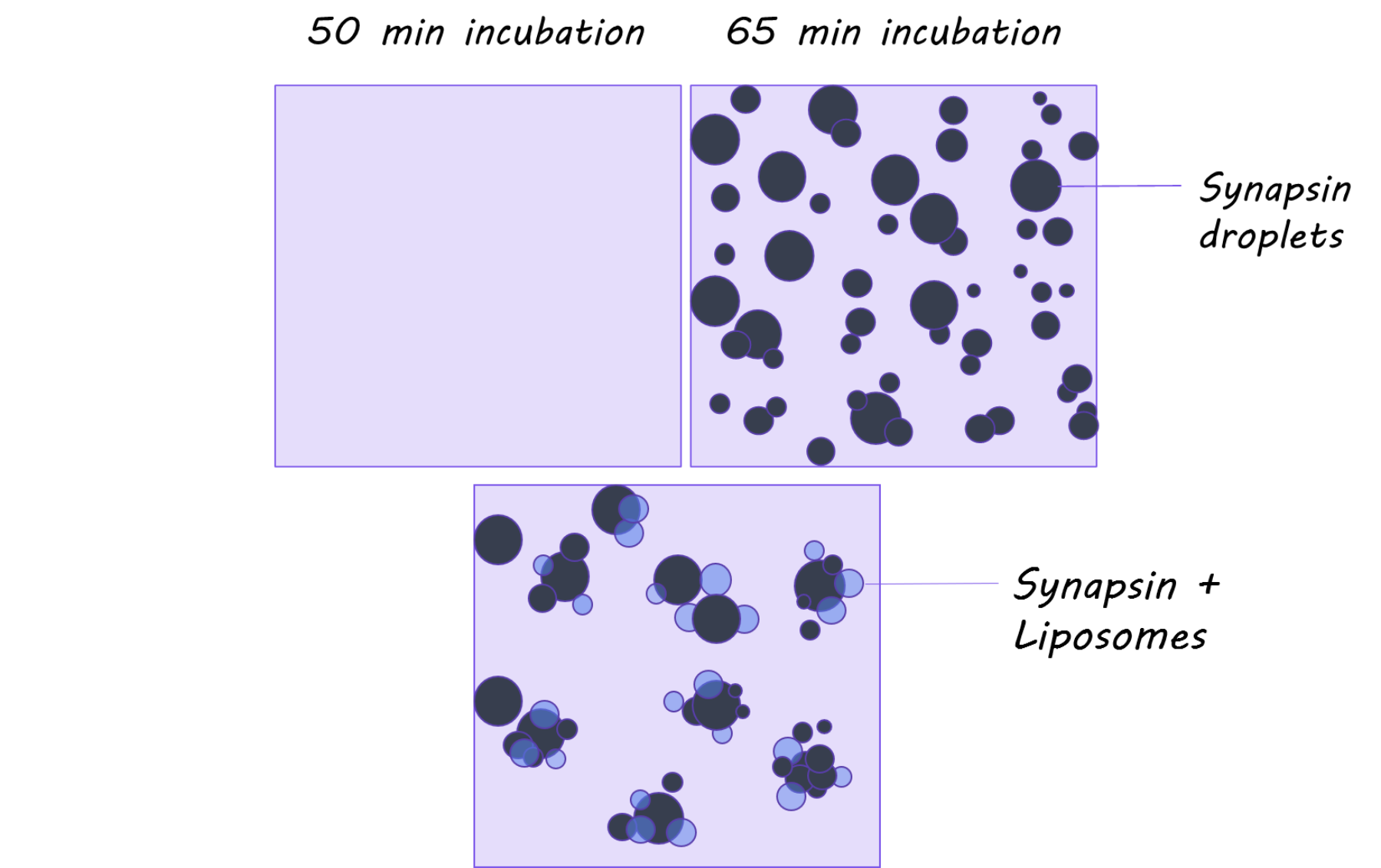
Synaptic vesicles carry neurotransmitters and thus are critical for neuron-to-neuron communication. Synaptic vesicles cluster together at the presynaptic membrane and yet are able to move within the neuron terminal prior to release. Why might this be? One protein called synapsin is among the most abundant proteins in presynaptic neuron terminals. It binds to synaptic vesicles and therefore might be involved in their release. Furthermore, recent research suggests that some proteins and molecules within the cytoplasm of cells (including neurons) may be able to organize themselves even in the absence of a membrane, via phase separation (e.g. like how oil and water separate). This week in Science, Milovanovic and colleagues test whether synapsin demonstrates properties of phase separation and whether it is involved in cluster forming or release of synaptic vesicles.

How did they do it?

The authors tagged synapsin with green fluorescent protein and incubated synapsin molecules with a salt containing liquid buffer (resembling typical physiological conditions) to test whether synapsin phase-separates (i.e. into two liquid phases). They also tested whether synapsin can recruit (into it’s phase, ie. liquid) other proteins within the presynaptic terminal. They then performed experiments to mimic the synaptic environment more closely (which is filled with many different molecules and organelles) by adding polyethelene glycol to the buffer as a crowding reagent. They tested how synapsin might interact with vesicles and be involved in their cluster forming by incubating small lipid vesicles with synapsin. Using green fluorescent protein tagging, fluorescence microscopy, and electron microscopy, they tested whether synapsin could recruit the lipid vesicles into its phase. They further tested whether calcium dependent phosphorylation of synapsin (which is known to occur in the synapse during neuron activity) resulted in a disassembly of the synapsin/lipid vesicle phase as this would indicate the involvement of synapsin in the vesicle dispersion that occurs in stimulated synapses.

What did they find?

Synapsin was confirmed to phase-separate under physiological conditions (i.e. similar to those occurring in neurons in the human brain) as was evident by droplets of synapsin forming within the liquid buffer solution. They found that many other proteins located in the presynaptic terminal with synaptic vesicles also underwent phase separation when incubated with synapsin. Therefore, they tested how these interacted with synapsin. Two proteins known to bind synapsin, intersectin and GRB2, were found to form droplets with synapsin in the liquid buffer. After adding a crowding reagent to mimic the environment of a synapse, droplets of synapsin (either alone or with its binding partners intersectin or GRB2) formed even more efficiently. After incubating synapsin with lipid vesicles, they found that the synapsin droplets sequestered lipid vesicles which resulted in the formation of droplets containing lipid vesicles. As a control experiment, they tested whether other liquid mediums containing proteins that phase separate (but do not bind lipid vesicles) could also sequester lipid vesicles, and found that they did not. Thus, synapsin specifically allows the clustering of lipid vesicles. Upon calcium dependent phosphorylation of synapsin, droplets of synapsin alone or synapsin + lipid vesicles dispersed, supporting the hypothesis that synapsin is important for vesicle sequestering and for their dispersion during stimulation.

What's the impact?

This is the first study to show that phase-separation of a protein, synapsin, within the presynaptic terminal plays an important role in vesicle clustering. More generally, it is the first demonstration that phase-separation of a protein can organize vesicles within a cell. We now know that synapsin, and importantly it’s liquid phase, is involved in sequestering and dispersing vesicles in the presynaptic terminal. Future studies should examine how molecules within neurons may organize themselves based on phase separation.

leighquote1800.png

Milavanovic et al., A liquid phase of synapsin and lipid vesicles. Science (2018). Access the original scientific publication here.

Caudate Nucleus Stimulation Induces Negative Repetitive Decision-Making

What's the science?

Some mood disorders are characterized by irrational, pessimistic, persistent thoughts. These thoughts are related to more cautious/pessimistic and inflexible decision making or evaluation. We don’t know the neural mechanisms involved in these pessimistic evaluations. However, the caudate nucleus is known to be involved in mood disorders, and is known to be involved in behavioral flexibility. This week in Neuron, Amemori and colleagues stimulated the caudate nucleus in primates to understand the role of the nucleus in persistent negative states and value evaluation.

How did they do it?

Two monkeys performed a behavioral task while one of 15-18 electrodes distributed throughout the caudate nucleus was stimulated using a microstimulation technique. Local field potentials were recorded from the other electrodes simultaneously. In the behavioral task, the monkey was shown a red bar, with the size of the bar indicating the amount of food the monkey was about to receive, and a yellow bar indicating the size of an air puff to the face (which it disliked) the monkey was about to receive. It used a joystick to indicate one of two choices: it either chose to a) accept the airpuff and food (taking into account the size of each) (‘approach’ choice) or b) to avoid the airpuff and receive a very small amount of food (‘avoidant’ choice). Decision and reaction time was recorded. 112 stimulation experiments (across both monkeys) and 74 recording-only experiments (across both monkeys) were performed (each experiment consisted of 150-250 trials). In the stimulation experiment, a threshold of 5% was set indicating a change in decision frequency in stimulation-on versus stimulation off-blocks. If the threshold was passed during stimulation (decisions tended to be either more ‘approach’ or more ‘avoidant’) the stimulation was considered effective. The effect of microstimulation on decision behavior during the task was analyzed.

What did they find?

Microstimulation at most sites did not change decision behavior. However, stimulation at about a quarter of the sites increased avoidant choices, and stimulation at a few sites increased approach choices. These effective sites were distributed throughout the caudate nucleus. Sites where stimulation invoked avoidant decisions were considered to be part of a ‘generative circuit’. Neuronal spiking activity was more likely to encode avoidant decisions near these negative effective sites. To see whether stimulation had persistent effects, the authors assessed follow-up blocks without stimulation after stimulation blocks, and found that increased avoidant decisions persisted 78% of the time after effective stimulation at negative sites, while positive effect were maintained only 10% of the time following stimulation at positive sites. This suggests that stimulation at negative sites could induce persistent negative mood. A tendency for stimulation at negative effective sites to induce a repetitive pattern of avoidant decision was also found, suggesting negative stimulation resulted in repetitive avoidant behavior. Oscillatory brain activity in the beta frequency band is known to be associated with maintenance of cognitive states. Therefore, the authors tested whether changes in beta band oscillations were related to decision making. They identified electrodes where task-related beta band activity could be observed, and found that there was greater beta band power prior to avoidant decisions when stimulation was off. During follow-up following stimulation, beta band power tracked choices even more closely, suggesting stimulation enhanced this relationship.

kasey1800.png

What's the impact?

This study suggests that the caudate nucleus can influence negative or pessimistic decision making or valuation via potential generative circuits that can lead to a persistent negative state. These findings have implications for mood disorders in which persistent, inflexible, negative thinking is a common observation.

kaseyquote1800.png

Amemori et al., Striatal Microstimulation Induces Persistent and Repetitive Negative Decision-Making Predicted by Striatal Beta-Band Oscillation. Neuron (2018). Access the original scientific publication here.