
A New Autoantibody involved in Neuropathic Pain

What's the science?

Neuropathic pain can be caused by conditions such as nerve injury, nerve demyelination, spinal cord injury, or stroke, and refers to pain due to injury or disease of the sensory system, according to the International Association for the Study of Pain (IASP). In particular, patients with multiple sclerosis can experience pain which may be due to inflammation of the spinal cord (myelitis). This inflammation may cause an immune response, and a potential mechanism of neuropathic pain could be due to autoantibodies, antibodies within the body’s own immune system which may somehow affect the nerves. This week in Annals of Neurology, Fujii and colleagues assessed autoantibodies in neuropathic pain patients to understand what role they might play in neuropathic pain.

How did they do it?

110 patients with a condition causing probable or definite neuropathic pain (IASP criteria for neuropathic pain) and 50 controls participated. Controls were comprised of 20 healthy individuals, 20 people with a neurodegenerative disease and 10 people with a collagen-vascular disease. Sera was extracted from blood from each individual. Immunofluorescence assays were performed, using sera from human study participants and tissue that had been removed from adult male mice (the dorsal root ganglia, the spinal cord, and skin). Human IgG antibodies bound to the tissue were detected using anti-human IgG antibodies. In the dorsal root ganglia (nerve root near the spinal cord) double immunostaining for both human IgG antibodies and neuronal markers was performed. Participants were classified as seropositive (IgG antibody binding to mouse tissues) or seronegative (no immunoreactivity). Each participant’s IgG subtype was also identified. Western blotting was performed to identify proteins/antigens that the autoantibody was bound to.

What did they find?

There was no immunoreactivity to the dorsal root ganglion neurons amongst controls, but serum IgG binding was positive in 11 neuropathic pain patients (seropositive patients). IgG subclass IgG2 was dominant in these seropositive patients. Using dual immunostaining, the authors identified that IgG antibody binding occurred most frequently at unmyelinated C fiber neurons (most commonly non-peptidergic). C fiber neurons are known to be involved in pain. When the authors performed dual staining for antibodies and two receptors known to be involved in pain (TRPV1 and P2X3), they found that antibodies were partially (TRPV1) or mostly (P2X3) co-localized with the receptors. The stain for IgG antibodies also co-localized with axon terminals in the spinal cord in lamina (layer) I and II (where C fiber neurons are known to terminate). The authors then characterized the autoantigen (that the autoantibody binds to) immunochemically using mass spectrometry, and found that it was likely to be plexin D1 (in mice). To characterize plexin D1 in humans, the authors performed immunostaining in tissue from two deceased human donors and observed co-localization of unmyelinated afferents and plexin D1 in the dorsal horn of the spinal cord. This finding suggests that the autoantibody was specific to neurons important for pain.

The 11 patients with auto-antibodies for small unmyelinated dorsal root ganglion neurons tended to be younger and female, and had burning or tingling pain with sensory impairment. Sera from patients with anti-D1 plexin antibodies was then applied to dorsal root ganglion neurons in mice, and cellular and nuclear swelling and increased permeability of the membrane was observed, suggesting cytotoxicity.
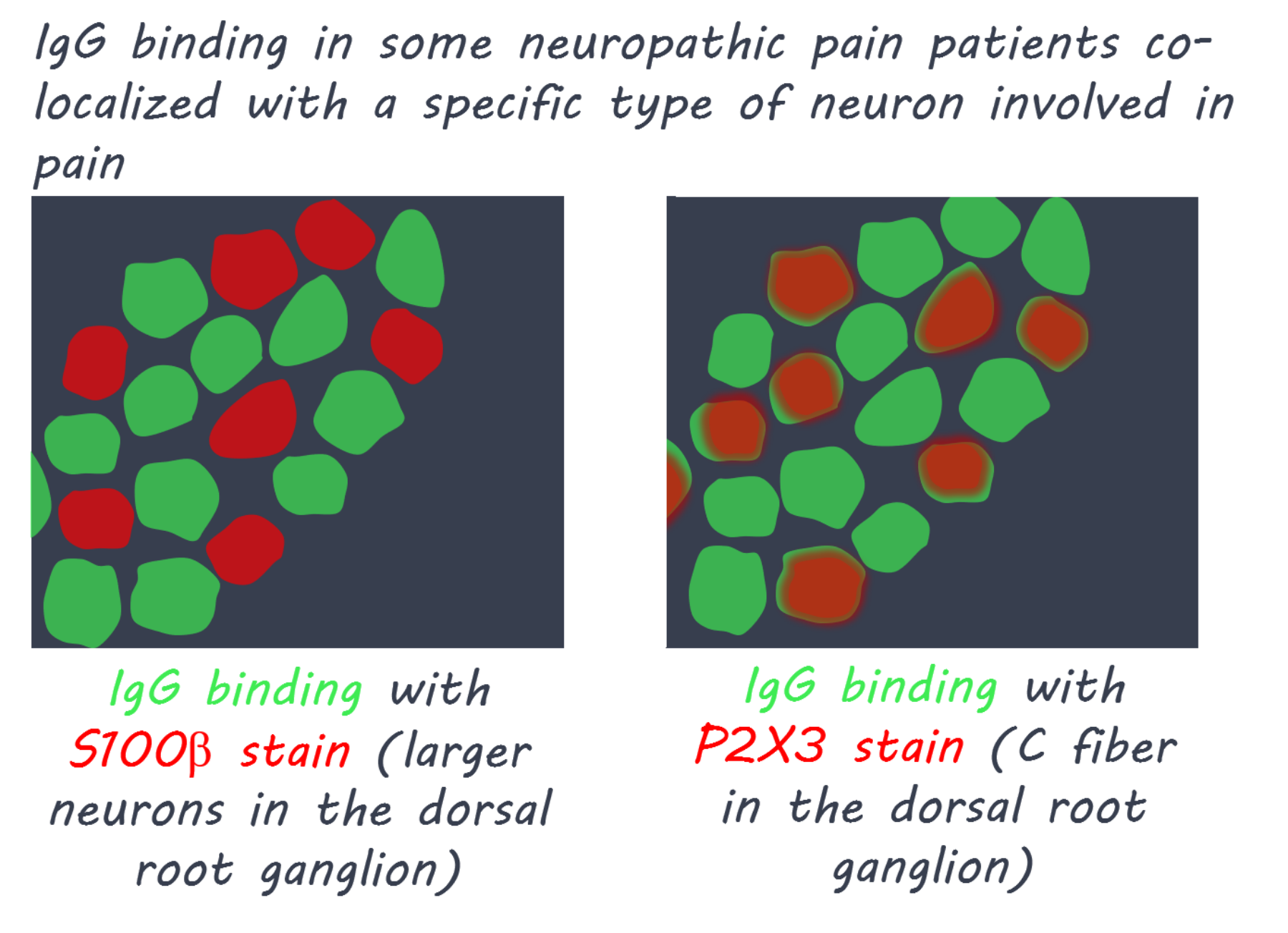
IgG1800.png

What's the impact?

This is the first study to identify human autoantibodies that bind to neurons known to be involved in pain in neuropathic pain patients. Autoantibodies were found to be specific to the plexin D1 protein, which plays various roles in the immune and nervous systems. This study could have important implications for the study of neuropathic pain and its response to immunotherapy.

IgGquote1800.png

Fujii et al. A novel autoantibody against plexin D1 in patients with neuropathic pain. Annals of Neurology. 2018.  Access the original scientific publication here.

Accents and Confidence Modulate Brain Activity during Speech Perception

Post by: Shireen Parimoo

What's the science?

In-group favoritism refers to people’s tendency to hold more positive views about members of their own social group compared to members of an out-group. Accents act as indicators of social belonging, and a speaker’s voice also conveys information about their trustworthiness; they are more likely to be believed when their tone is confident rather than doubtful. We don’t know how voice-based perception of a speaker is processed in the brain and how level of confidence may influence the perception of an out-group speaker. This week in NeuroImage, Jiang and colleagues investigated patterns of brain activity in participants listening to in-group and out-group speakers with different accents and varying degrees of confidence.

How did they do it?

Twenty-six young adults listened to and rated the believability of English statements spoken in their native accent (Canadian-English; in-group), in a regional accent (Québécois-French; out-group/regional), and in a foreign accent (Australian; out-group/foreign). The statements also varied in whether they sounded confident, neutral, or doubtful. Participants rated how intelligible each accent sounded to them and how much they liked each accent. Neural activity was recorded using functional magnetic resonance imaging (fMRI) to understand whether in-group and out-group accents differentially activated the brain while participants judged believability. The authors used psycho-physiological interaction (PPI) analysis to determine if activity in regions involved in confidence judgments, such as the right superior temporal gyrus and the inferior frontal gyrus, was correlated with activity in other brain regions while participants made believability judgments. Finally, they examined whether these functional connections in the brain were modulated by the speaker’s accent.

What did they find?

Overall, participants were more likely to believe statements spoken in their native accent than those spoken in a regional or foreign accent. Listening to speakers with out-group accents activated temporal regions of the brain (e.g. superior temporal gyrus), whereas listening to in-group accents activated frontal regions (e.g. superior frontal gyrus). Participants also rated neutral and confidently spoken statements as more believable than doubtful statements; statement confidence was related to increased activity in the superior temporal gyrus, while statements made in a doubtful voice were associated with greater activation of temporal areas. Although confident statements were rated as equally believable across all accents, brain activity was greater in the caudate, cuneus, and fusiform regions when confident statements were heard in out-group accents. This could be because judging the believability of out-group speakers requires more in-depth processing of the vocal and acoustic characteristics of speech. PPI analysis revealed that listening to out-group accents resulted in increased connectivity between regions involved in decoding confidence – such as the superior temporal gyrus – and regions involved in inferring meaning of sentences, such as the inferior frontal gyrus. Statement believability was associated with greater connectivity between the superior temporal gyrus and the middle temporal gyrus and between the superior temporal gyrus and the lingual gyrus/middle occipital gyrus when listening to out-group speakers. These findings suggest that neural activity associated with processing voice characteristics and associated biases towards out-group speakers can be modified by the level of confidence of the speaker.

                                     Brain, Servier Medical Art, image by BrainPost, CC BY-SA 3.0

                                     Brain, Servier Medical Art, image by BrainPost, CC BY-SA 3.0

What's the impact?

The study demonstrates how distinct neural mechanisms are involved in carrying out the same decision-making process in speech perception depending on the speaker’s accent and degree of confidence. These results provide a deeper understanding of how different regions of the brain are involved in categorizing speakers based on group membership, and the effect this has on social inference from speech.

Jiang et al. Neural architecture underlying person perception from in-group and out-group voices. NeuroImage. 2018.  Access the original scientific publication here.
The Effects of Maternal Cortisol on the Amygdala and Internalizing Behaviours

What's the science?

Cortisol is a hormone involved in the body’s physical and psychological stress response. During pregnancy, the hormone can reach the neonate either directly or via fetal corticotropin-releasing hormone. Some cortisol is critical for fetal brain development, but abnormal levels are associated with psychiatric disorders in offspring. The amygdala is a brain region that has many cortisol receptors, and in animal models, high levels of maternal cortisol have been found to result in high negative emotion and stress reactivity in offspring. Sex differences in the effects of maternal cortisol have also been found; negative emotionality may be more likely to be present in female offspring. This week in Biological Psychiatry, Graham and colleagues assessed the effects of in utero cortisol exposure on the amygdala shortly after birth.

How did they do it?

A total of 70 mother-infant dyads participated in the study. Each mother collected 5 saliva samples of cortisol over the course of a day for a 4 day period during each of her 3 trimesters of pregnancy (60 samples per mother total). The area under the curve (similar to assessing overall cortisol output) was calculated for each trimester, resulting in reliable indicators of cortisol levels representative of each of the three trimesters. These values were also log-transformed for normalization purposes. Infants underwent brain functional magnetic resonance imaging (fMRI) at 4 weeks of age. Resting state functional connectivity (a measure of the synchrony of brain activity at rest) was calculated between the right and left amygdala and the rest of the brain, and the relationship between maternal cortisol and these connections was assessed. At 24 months of age, mothers reported on their child's internalizing behavior (e.g. depression or anxiety symptoms) using the Internalizing Behavior Scale of the Children's Behavioral Checklist.

What did they find?

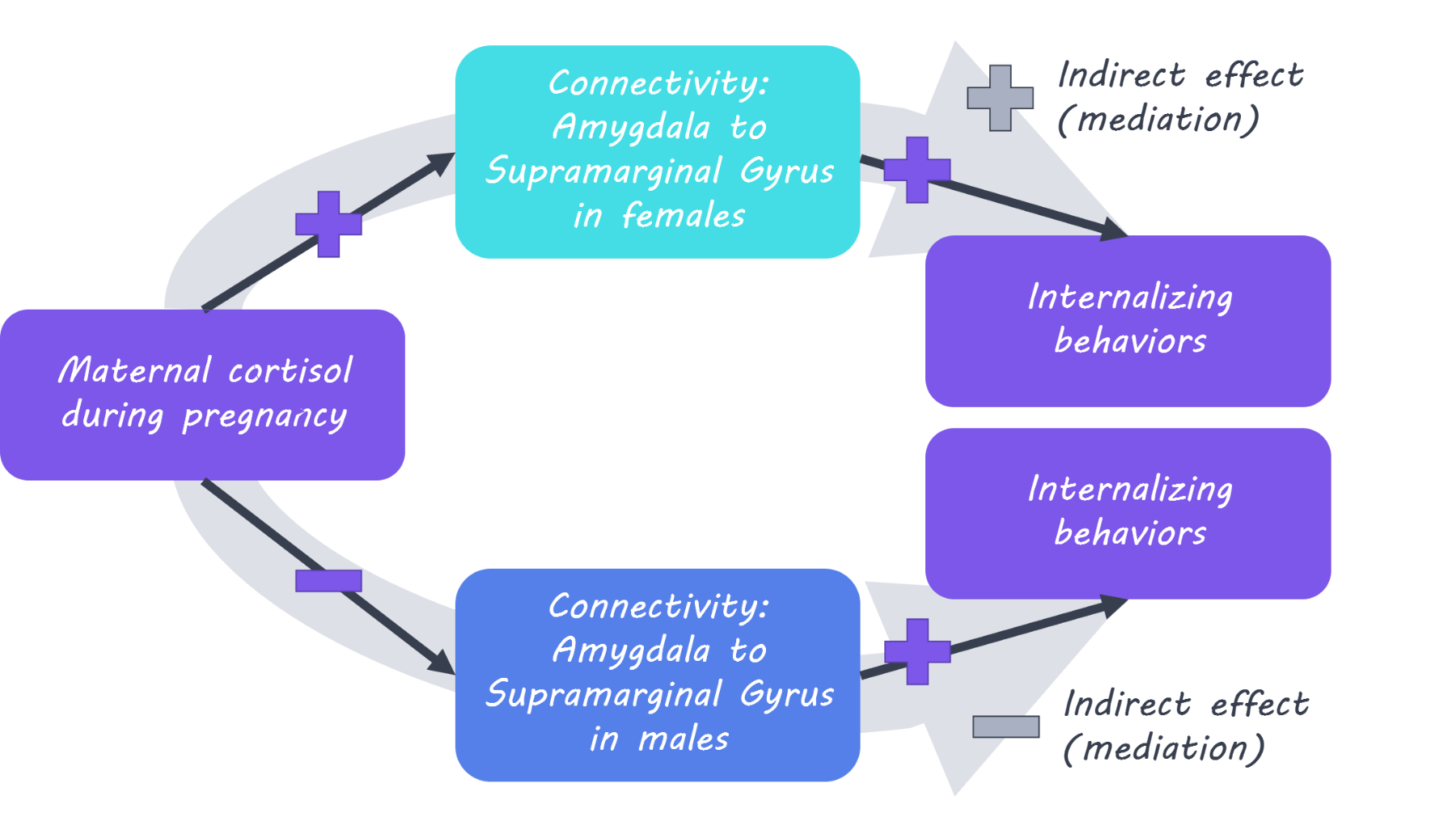
There was an interaction between sex and maternal cortisol in predicting connectivity between the bilateral amygdala and the left supramarginal gyrus and superior temporal gyrus. Probing the interaction revealed that in females, amygdala connectivity with the aforementioned cortical regions was generally stronger with higher maternal cortisol, while it was weaker in males. The results suggest that the relationships between cortisol and connectivity of the amygdala to various regions of the cortex were opposite for males versus females. Further, connectivity between the right amygdala and the supramarginal gyrus was positively correlated with internalizing behaviour in children (not dependent on sex). This association remained even after considering levels of maternal depressive symptoms, another important potential influence on child internalizing behavior. Upon mediation analysis, the authors found that connectivity between the right amygdala and supramarginal gyrus mediated the relationship between maternal cortisol and child internalizing. Therefore, cortisol exposure during pregnancy is associated with higher internalizing behaviors in females through a pathway involving stronger right amygdala connectivity.

cortisil1800.png

What's the impact?

Cortisol levels have been assessed in utero in animals models and at single time points during pregnancy in humans. However, this is the first study to demonstrate a relationship between connectivity of amygdala and maternal cortisol (which differs by sex) using a robust measure for cortisol levels over multiple key time points. The results suggest that this hormone involved in the stress response may alter integration of the amygdala with cortical brain regions during an early phase of brain development.


Graham et al., Maternal Cortisol Concentrations During Pregnancy and Sex Specific Associations with Neonatal Amygdala Connectivity and Emerging Internalizing Behaviors. Biological Psychiatry (2018). Access the original scientific publication here.